Turning the Tide
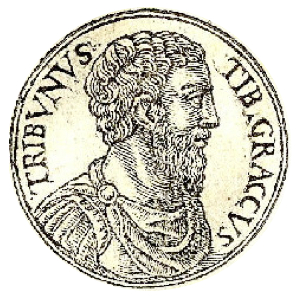
by Gracchus
 The theme of the last Gracchus was the unraveling of the Pax Americana, that is to say, the global political, military, and economic arrangements the United States put in place after World War II. Borrowing from the famous words of Yeats, it concluded: “Unless we act, if we do not change, the blood-dimmed tide of history may eventually drown us all.” One reader, after some kind words about that article, asked for another to “spell out what we must change”. This is a tall order, which cannot adequately be encompassed in six or seven hundred words. But here, inadequate as it may be, is an attempt.
Change begins with truth-telling, so let’s begin by confronting three uncomfortable truths about ourselves:
(1) The Pax Americana is at its heart an imperial enterprise designed to enrich the United States, often at the expense of other peoples and nations. This is not to say that our influence in the world is entirely without good intentions or sometimes benevolent results. It may even be that our imperium is more benign than others have been. But that is not its main purpose. In pretending otherwise, we all too often deceive ourselves, but we deceive no one else.
Earlier empires were more self-aware. The Romans didn’t conquer the world to civilize it; they conquered it to acquire power and wealth. When the average man on the Roman street was sent to war, he knew exactly what he was fighting for, and as long as he got his piddling share of profits, he had little need for lofty moral rhetoric about Rome’s civilizing mission. It was, after all, a Roman historian who put these words in the mouth of a “militant barbarian” resisting the invasion of his country: “Where the Romans make a wasteland, they call it civilization.”
Perhaps ordinary Americans would feel the same way if they had been bluntly told that we invaded Iraq, not to protect ourselves from non-existent weapons of mass destruction, but to control its oil fields and to protect the economic interests of Exxon-Mobil, British Petroleum, and Royal Dutch Shell. Instead of putting their sons and daughters in harm’s way, they might have chosen to turn down their thermostats, buy smaller cars, and put solar panels on their roofs.
(2) The American “way of life”—a “way of life” that we are constantly being told must be preserved and defended—cannot be sustained. Five percent of the world’s population cannot go on consuming 25 percent of its resources, expecting the other 95 percent to put up with such a fundamentally unjust arrangement forever. The only way to prolong this arrangement is for the United States to use force and still more force until no amount of force is any longer sufficient or economically viable.
Every earlier empire eventually faced this insoluble equation. Either the money runs out, as it did with the British Empire, or the balance of power is overturned by the conquered, as happened with the Romans. Inevitably, a “way of life” that is sustained by imperial exploitation leads to terrible consequences. In its waning days, the British Empire confronted terrorists in India, in Malaysia, in Ireland, and in Jewish Palestine. Today, many of those terrorists are—rightly or wrongly—lauded as patriots.
If we were prepared to confront such facts, then we could make a choice. We could cling to our privileged way of life and face the consequences, or, if we wished to go on living at all, we could learn to live more modestly. The British finally, albeit reluctantly, learned that lesson and gave up what was left of their crumbling empire; the Romans never learned it, and their way of life collapsed. We must abandon the myth that we are an “exceptional” people, who can ignore the rules of history and live by our own rules instead. History makes no exceptions—for us or anyone else.
(3) Last of all, we must shake off the pride that comes with power. There is much in our history to be proud of, and we should never shrink from that. But justifiable pride and puffed-up imperial self-congratulation are different things.
When Thomas Paine wrote, “We have it in our power to begin the world over again,” he was not talking about military or economic power. He was speaking about the powerful moral ideas of universal human liberty and equality. Those were the ideas that, once upon a time, made this country a “city upon the hill,” inspiring the rest of the world with a living example of freedom, civic virtue and democratic practice.
The ultimate truth is that the democracy our Founders envisioned and bequeathed to us is now all but gone. If we are to have any hope of winning it back, we must acknowledge what we have become—a global imperial power with a “way of life” that is sustained by war and the industries of war. Millions of Americans owe their livelihoods to this imperial enterprise, and hundreds of millions around the world hate us for it.
This, above all else, is what we must change. Because this is the only change that will turn back the blood-dimmed tide before it washes us away.
 gracchusdixit