A Dangerous Idea
by Gracchus
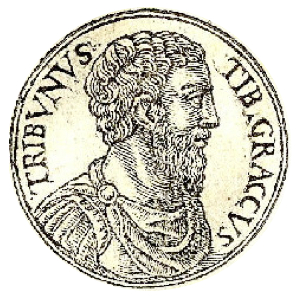 The French philosopher and journalist, Emile Chartier, once observed: “Nothing is more dangerous than an idea when it is the only one you have.” For two hundred years, we have been in the thrall of one, overpowering idea that is not only dangerous but fraudulent. That idea is the notion that the “neoliberal” economic system, a.k.a., global capitalism, is the only way the world can work, as if our current economic arrangements were like the laws of physics or biology—inexorable and utterly beyond our control.
We have Adam Smith, the spiritual father of capitalism, to thank for this. It was Smith who first conjured up the fairy tale of the “invisible hand,” with its implication that “the market” is somehow part of the divinely ordained fabric of the universe.
Thanks to Smith, the proponents of neoliberalism never tire of telling us that the central characteristics of global capitalism—lower wages, cut-throat competition for jobs, the relentless pursuit of profit—are simply the way the world works and will always work.
Neoliberal philosophers go further, claiming that prosperity and personal freedom are inseparable from the “free market” and “free trade,” that we cannot have the one without accepting the other. Never mind that you won’t find one word about the “free market” or “free trade” in the Declaration of Independence, the Constitution of the United States, or the Bill of Rights.
Neoliberal historians would like us to believe that global capitalism is single-handedly responsible for the innumerable scientific, technological, and medical advances of the last two hundred years, that without capitalism we would still be living in the Dark Ages, that all progress depends on accepting and expanding the economic system they revere. Never mind the fact that capitalism had nothing whatever to do with the discoveries of Galileo or Copernicus, Marie Curie or Albert Einstein, William Harvey or Jonas Salk.
Neoliberal politicians assert that property rights are indistinguishable from human rights, that every encroachment on the one—in the form of redistributive taxes, social welfare, organized labor, or public regulation of business—is a violation of the other. Never mind the obvious moral distinction between property and people, between a bank account and a human being.
Neoliberal “reformers” lecture us that our public schools are bankrupt, that they are failing to prepare our children for the “jobs of the future,” as if the only purpose of education were to train diligent, productive, and compliant workers. Never mind outmoded ideas like intellectual growth, informed citizenship, or the sheer love of learning,
Neoliberal institutions like the International Monetary Fund and the World Bank never tire of demanding that entire nations must, if they want to survive, tow the line, slash public spending, “liberalize” their labor markets, privatize public services, and pay their creditors at all costs. Never mind quaint ideas like democracy or national sovereignty, which must bow before the market, and if they won’t bow, must be forced to their knees.
The neoliberal narrative has been so pervasive for so long that it has rarely been questioned, even by its victims. We have, nearly all of us, acceded to the fraudulent ideology that profit, growth, consumption and competitiveness are the sole metrics of human progress.
But that is beginning to change.
Four months ago, the Greeks elected an unapologetically socialist government, which is struggling against fierce odds to roll back the crippling austerity imposed upon that country by the neoliberal financial institutions of Europe. Those institutions may yet strangle the Greeks into submission, but if they do, the price may be the unraveling of the European Union.
Less than a month ago, the Scots voted overwhelmingly for the Scottish National Party, utterly rejecting the neoliberal catechism of a conservative government in London. If that government does not change its ways, the consequence will certainly be the diminution, and could even mean the dissolution, of the United Kingdom.
Just days ago, Democrats in Congress delivered a stunning setback to their own President’s attempt to push through yet another of the many so-called “free trade” agreements that have accomplished little in the last thirty years except to enrich corporations, despoil the environment, and destroy millions of American jobs. This latest agreement may yet go through, but if it does, a Democratic President will have betrayed his own party by conspiring with the Republicans, with results that no one can foresee.
All around the world, people are beginning to recognize the neoliberal fairy tale for what it is: a fiction that doesn’t even remotely resemble reality, a myth that conveniently benefits those at the top. Property rights do not give anyone the right to treat other human beings as if they were nothing but assets and chattel. It wasn’t the “free market” that improved the human condition; it was the freedom to think. Global capitalism isn’t part of the natural order; it is a manmade creation, which mankind can freely change.
It was the astronomer, Carl Sagan, who said: “Once you give a charlatan power over you, you almost never get it back.” We’ve been giving the neoliberal charlatans power over us for too long. There is still a chance, a slim chance, that we can get it back.
 gracchusdixit