The Death of Our Democracy
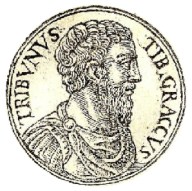 With the dismal year of 2016 behind us, and the uncertainties of the years ahead hanging over us like a glowering cloud, millions of Americans are facing the future with trepidation, anxiety, and dread. Muslim Americans worry that they will be forced to register like enemy aliens, will be spied upon, may even be banned; Hispanic Americans fear that a fist will soon pound on the door in the middle of the night and rip their families apart; African Americans are afraid that they will once again be stripped of their voting rights and their most basic civil rights, relegated to a new regime of subordination and humiliation; women are terrified that their long and hard-fought struggle to control their own bodies, make their own reproductive choices, and make a place for themselves in a world too long controlled by men will be swept aside; gay and lesbian Americans shudder to think that their basic humanity will again be denied, that they will be shamed, shunned, and shut away in a closet of social and legal ostracism. All these—our neighbors, our friends, our family members, our fellow Americans—are asking themselves whether there is any longer a place for them in their own country, whether their country is any longer the United States of America.
These are fundamental and fearful questions, to which there are no clear and present answers. One thing is clear, however. We are not the country we were just eighteen months ago, and we are unlikely to be that country ever again.
Since the founding of our republic, we have prided ourselves on the stability and resilience of our democratic institutions, on our role as a morally “exceptional” nation, providing a beacon of hope and inspiration to countless millions around the world “yearning to be free.”
Whatever else we may have learned in the last eighteen months, we have learned—to our ever-lasting shame—that neither of these self-congratulatory myths any longer applies. Our democratic institutions are far more fragile and defenseless than we ever imagined, and it is abundantly clear that we no longer morally “exceptional”—if, in truth, we ever were.
Little more than a month ago, more than sixty million Americans cast their votes for an autocratic demagogue and sociopathic bully who has no regard whatsoever for our democratic institutions. He knows nothing of our constitution and quite obviously doesn’t care. Even before taking the oath of office, he has committed countless impeachable and criminal offenses, insisting that he, as president, will not be bound by any laws or constitutional limitations.
Such claims are outrageous, of course. But that is not the problem. The problem is that our democracy depends not only on the expressed formalities of law but on the constraints imposed by informal and unspoken political norms. The only legal remedy to rein in a demagogue like Trump is impeachment. It is already clear that a slavish and sycophantic Republican Congress is unlikely or unwilling to invoke this remedy, and even if it were, it is by no means certain that Trump would comply. The sad truth is that our democracy has no way of constraining a president who refuses to abide by political norms and unspoken rules, who refuses to accept the authority of law itself. When a tyrant in the making, like Donald Trump, chooses to ignore—or deride—such norms, a democracy like ours has no defense.
Trump has already provided ample evidence that he believes himself to be above all normative constraints as well as the law itself. He has refused to release his tax returns. He has refused to disclose, let alone divest or separate himself from, his businesses and his innumerable conflicts of interest. He has refused to tell us, as he once promised he would, whether his wife violated immigration laws and worked in this country illegally. Indeed, he has declared that the President of the United States “cannot have a conflict of interest”—a claim so breathtakingly preposterous that it beggars the imagination.
The election of Donald Trump has exposed the Achilles heel of our democracy. Legal remedies only work when those involved are willing to abide by the law. Absent that willingness, the only remedy is force. Since our constitution makes the president the ultimate arbiter when it comes to the use of force, it strains credulity to think that Donald Trump would ever allow himself to be removed from office. If he is finally exposed to be the criminal that he almost certainly is and nonetheless refuses to go, how will our democratic institutions be capable of compelling him? The dismal answer is: they won’t.
The election of Donald Trump has upended another of our consoling national myths—the notion that we are a morally “exceptional” nation. In confronting Trump’s vulgar and hateful rhetoric, our current President, Barack Obama, has frequently opined: “Those are not our values. That’s not who we are.” I wish it were so.
Although a sizable majority of the American people did not vote for Donald Trump, more than sixty million of them did. Many of those people did not merely excuse, dismiss, or rationalize his inflammatory antics, they hooted, hollered, and cheered him on, applauding his every lie and dismissing any criticism of those lies as “political correctness.” Any claim we might once have had to being a morally “exceptional” nation has been completely undone by Trump’s election. He is merely the American embodiment of a virulent political tidal wave that is sweeping across the western world. There are Trump avatars in the United Kingdom and France; in the Netherlands, Germany, Austria, and Italy; in Poland, Hungary, the Czech Republic, and Serbia; even in the legendarily liberal democracies of Scandinavia. These “populists,” as they like to call themselves, all bend in the same direction——nationalistic, racist, xenophobic. They are all supported, and in many cases funded, by Vladimir Putin’s Russia.
I would like to be more optimistic about the future. I would like to believe that our democracy has enough resilience to survive, recover from this catastrophe, and reconstitute itself, to become, once again, that “city upon the hill” that for more than 200 years offered hope to countless millions around the world. I am afraid, however, that our claim to being a morally “exceptional” nation is finished and that the death of our democracy will soon follow. If that democracy somehow survives the presidency of Donald Trump even remotely intact, it will be a lucky and unlikely accident.
 gracchusdixit