The Not-So-New New Normal
by Gracchus
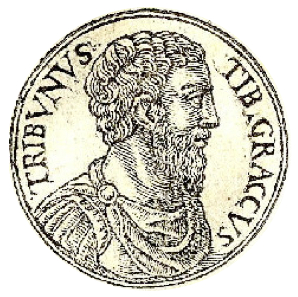 From the day, three years ago, when Donald Trump lied, cheated, and stole his way into the White House, we have been told that his soon-to-be-impeached presidency is so abnormal that it constitutes a “new normal,” a sharp break, not only from the unspoken norms that once governed our public life, but also from the conservative principles that supposedly constitute the bedrock of the Republican Party. A small band of “Never-Trump” Republicans, reduced to earning a living by talking to one another on cable news or venting their frustrations in the pages of the New York Times, assert, with the fervor which only the spurned can muster, that Trump doesn’t represent their party. To explain the stubborn fact that so many other members of that party have prostrated themselves before the malicious manikin in the White House, they protest that Trump has bullied otherwise decent Republicans into submission, or, like the leader of some cult, has bewitched them. If such explanations were true, they would be terrible enough. But the truth is more terrible than that.
As monstrous as Donald Trump undoubtedly is, he is no anomaly, nor is his presidency a “new normal,” as far as the Republican Party is concerned. On the contrary, he epitomizes—indeed, he is the ultimate embodiment of—everything awful the Republican Party has represented for generations. Trump’s personal and public corruption, his contempt for the law, his petty vindictiveness, his hatred of foreigners and immigrants, his vitriolic racism, and above all else, his willingness to intimidate, threaten, and demonize those who oppose him—all this has been part and parcel of Republican politics for as long as I have been alive. Far from being “new,” the awfulness of the Trump presidency is an old and familiarly malevolent story. The only thing new about it is Trump’s shameless candor. In days gone by, his Republican predecessors were sufficiently concerned about public opinion to pretend to be something other than what they were; Trump doesn’t even bother—in all likelihood, because he doesn’t care.
It can fairly be said that the Republican Party of Donald Trump was born on the evening of February 9, 1950, when an obscure junior senator from Wisconsin named Joe McCarthy rose to harangue a small gathering of Republican women in Wheeling, West Virginia. McCarthy was an utterly unethical opportunist without an ounce of principle—and a belligerent drunk to boot. But he was no fool. He knew full well that his brief time in the Senate had produced nothing of consequence or distinction, and that he was going to need a “reset” if he was to have any hope of being reelected. The speech in Wheeling gave him the chance he was looking for.
Brandishing a piece of mysterious and unidentified paper in his fist, McCarthy bellowed to the small audience at his feet that it contained the names of 205 “known communists,” who, he declared, had wormed their way into the highest reaches of government, including, most particularly, the Department of State, which, according to McCarthy, was infested with treasonous, un-American Ivy-League elitists. The junior senator never revealed the actual contents of that piece of paper, because it was as phony as the stacks of file folders Donald Trump piled up three years ago when he still bothered to pretend that he had disentangled himself from his personal business interests.
None of that mattered at the time, however. McCarthy’s speech in Wheeling was the opening salvo in what became a true witch hunt, in which he sought to persecute those he smeared as “enemies from within”—the political establishment, professional civil servants, graduates of the nation’s elite colleges and universities, anyone, in other words, who did not qualify as “true Americans,” as defined by Joe McCarthy himself. The vast majority of these so-called “enemies” were innocent of any iota of wrongdoing, but McCarthy didn’t care. To distract voters from his own failings, to protect himself against electoral defeat, he needed enemies to denounce. And denounce he did.
Joe McCarthy’s years-long campaign of innuendo and intimidation, accusation and vilification, ended countless careers, ruined hundreds of lives, and poisoned the public life of the country for a generation. In all this, he was aided by a notoriously amoral and corrupt lawyer named Roy Cohn, who served as McCarthy’s chief counsel and went on, many years later, to become Donald Trump’s legal fixer in the murky, mob-infested world of New York City real estate. To this day, Trump remains so enamored of Cohn that, when Jeff Sessions decided to recuse himself from overseeing the Mueller investigation, Trump’s first instinct was to howl in rage: “Where is my Roy Cohn?”
The road from Joe McCarthy to Donald Trump runs dead straight, and it runs straight through the Republican Party.
Two years after McCarthy launched his witch hunt, Dwight David Eisenhower was elected president, the first Republican to occupy the office in 20 years. As a national hero, revered for his former role as the Supreme Allied Commander in Europe, “Ike” had more than enough stature and political capital to put an end to McCarthy’s madness in a New York minute. But he did nothing of the sort. Instead, he dithered, dawdled, and delayed, until McCarthy finally crossed a line that even good old “Ike” couldn’t countenance. When McCarthy finally turned his sights on Eisenhower’s beloved United States Army, “Ike” had no choice but to turn his back on the junior senator from Wisconsin. McCarthy was censured, left the Senate in disgrace, and died. But the poison he had injected into the bloodstream of the Republican Party lived on.
In 1960, Eisenhower’s vice president, Richard Nixon, ran for president and was defeated by Jack Kennedy, a humiliation he never forgot and would never forgive. Whatever else may be said of Richard Nixon, he knew how to hold a grudge. In 1968, when he ran again, he did so by deploying the infamous “Southern Strategy,” a cynical but successful effort to inflame the racial prejudices of Southern whites. But then, he went even further. In the run-up to the election, he conspired with the government of South Vietnam to sabotage peace negotiations initiated by the sitting president, Lyndon Johnson. When Johnson learned of Nixon’s chicanery, he privately judged it to be treasonous. Even the leader of the Republican minority in the United States Senate, Everett Dirksen of Illinois, did not disagree.
Nixon’s misbehavior was an amateurish prelude to the sophisticated corruption of the Reagan administration. Ronald Reagan is now lionized as a hero in right-wing circles, the personification of the values and virtues the Republican Party pretends to revere. He was, in fact, a utter, albeit charming, fraud.
Before getting into politics, Reagan made a fortune as the paid shill of the General Electric Company, traveling the nation to give speeches denouncing as “godless socialism” any bit of legislation that might nibble away at GE’s profits. When he finally made it to the White House, Reagan’s corruption bloomed like the toxic red algae that now chokes the beaches of Florida every summer. He authorized the notorious scheme now known as the “Iran-Contra Affair,” in which the U.S. government secretly sold arms to Iran, paid for by profits from the opium trade, which were used in turn to fund a covert (and illegal) guerrilla war against the democratically elected socialist government of Nicaragua. Reagan’s Attorney General and long-time pal, Ed Meese, was forced to resign, when it was revealed that he had corruptly used his influence to toss lucrative government contracts to friends and political supporters.
Two months ago, Donald awarded the “Presidential Medal of Freedom” to Ed Meese, now a doddering, sagging shell of a man, a barely recognizable simulacrum of the person he once was. But like all Republicans then and now, he summoned up enough partisan bile to exploit the occasion by asserting his virtue and denying his undeniable guilt. He praised Donald Trump and was praised, in turn, by Trump’s own obsequious Attorney General, William Barr.
There is, in short, nothing new about the “new normal,” and history is nothing if not ironic.
 gracchusdixit