The Supreme Court Shell Game
 For opposing Donald Trump’s nominee to the Supreme Court of the United States, Republicans accuse Democrats of being petulant and obstructive, childish and churlish. How, they incessantly demand, could anyone refuse to confirm “this good man?” As if Neil Gorsuch’s “goodness” were self-evident. As if principled opposition to his nomination were ipso facto indecent. All this sanctimonious tut-tutting is little more than a cynical shell game, designed to distract attention from the clear and present dangers posed by this nomination.
There are three reasons for rejecting Neil Gorsuch, none of which is in the least degree petulant or obstructive, childish or churlish.
The first is that Republicans in the Senate shattered all norms and precedents by refusing for nearly a year even to meet with President Obama’s nominee, Merrick Garland. Garland was a “good man” if ever there was one, but Republicans denied him so much as a hearing. This denial was nothing less than a constitutional theft. Having exacted their pound of political flesh from President Obama, Republicans now cannot abide the thought that Democrats might somehow be able to do the same to Donald Trump. Their complaints about Democratic obstruction can therefore be dismissed as hypocritical and self-serving drivel.
The second reason is that, for all the talk about “this good man,” Neil Gorsuch’s judicial record is anything but good—it is terrible. He is a radically right-wing judge, whose political agenda saturates and perverts his judicial opinions. Republicans would like to pretend that this is not so, pointing to a handful of decisions in which he has broken with conservative orthodoxy. This, too, is a shell game.
Gorsuch opposes the right of women to make their own reproductive choices. He believes that states should have the right to criminalize homosexuals. He thinks that corporations are “persons” and, as such, are entitled to the same protections granted by the Bill of Rights to you and me. In virtually every contest between corporations and citizens, employers and employees, the powerful and the powerless, Gorsuch has sided with the rich, the powerful, and the privileged.
The third and principal reason to oppose this nomination is that Gorsuch intends to walk in the footsteps of the late Antonin Scalia. Not only does he hope to take Scalia’s seat, he considers Scalia to be a personal hero and follows Scalia’s judicial philosophy to the letter. To understand Gorsuch, we must therefore understand Scalia.
Antonin Scalia is known for advancing two, parallel theories of how the constitution and the law should be interpreted. Those theories are “original intent” and “textualism.”
“Original intent” rejects the idea that the Constitution is a living document, expressing broad and aspirational rights that can and should be adapted to changing historical conditions. The adherents of “original intent” view the constitution as a sacramental text, graven in stone. When new circumstances or challenges arise, they assert that the “original intent” of the 55 men (they were all men) who framed the Constitution must be the sole interpretive standard.
Apart from the obvious fact that it is all but impossible to reconstruct the intentions of men who lived 200 years ago, the theory of “original intent” is shameful on its face. The framers lived in an agrarian society, in which African-Americans were chattel, the very idea of women being able to vote was unimaginable, and Native Americans were an inconvenient and disposable impediment to the brutal land-grabbing of white Europeans. The framers had no experience of the Industrial Revolution, of coal mines, steel mills, or factories. They did not foresee the transportation revolution, with its web of railroads and highways, nor could they have imagined the communications and information revolutions. Why, one must ask, should the “original intent” of the framers be considered morally or practically definitive in anything but a metaphorical sense?
“Textualism,” on the other hand, asserts that statutes—that is, laws passed by legislatures—must be taken literally, without regard for the intentions of their authors. Its adherents insist that, once statutory language appears on a page, that text becomes the law, even when the text is ambiguous or contradictory. This theory is rather like Colin Powell’s quip about the unintended consequences of military action: “If you break it, you own it.”
One does not need to be a judge, a lawyer, or a legal scholar to recognize that these two theories of the law are illogical and incompatible. To assert them simultaneously, as Scalia did and Gorsuch does, makes no sense.
The defenders of this approach claim that constitutional and statutory law are entirely different things, that the former deals in abstract principles. whereas the latter concerns itself with tangible practices and policies. This distinction collapses under even cursory inspection.
The Constitution of the United States not only promulgates abstract principles, it also concerns itself with mundane specifics: the age at which a person may be elected president, the apportionment of congressional districts, the establishment of a national postal service, and so on. Conversely, many supposedly mundane statutes—the Civil Rights Act of 1964 and the Voting Rights Act of 1965, to name but two—concern themselves with broad, abstract principles no less than does the Constitution itself.
In the final analysis, the legal theories advanced by Scalia and Gorsuch are not a coherent philosophy at all, but, rather, an intellectual trick, allowing the law to be interpreted for political purposes.
This became glaringly apparent in 2008, when Scalia wrote the majority opinion in Heller v. District of Columbia. This narrow five-to-four decision upended nearly a century of settled law and, for the first time in our history, defined the Second Amendment as an individual right to bear arms. In advancing this proposition, Scalia’s problem was that the language of the Second Amendment nowhere mentions such a right. It merely states: “A well regulated Militia, being necessary to the security of a free State, the right of the people to keep and bear Arms shall not be infringed.”
To subvert the unambiguous meaning of this language, Scalia dismissed references to a “well regulated Militia” and the “security of a free State” as a “prefatory clause,” having no effect on the true intent of the amendment. This was a grammatical and logical fiction, invented out of whole cloth.
Scalia was still left with the problem that the Second Amendment talks about “the people” rather than individual persons. So, he turned to “original intent,” cobbling together a dubious historical narrative about gun rights in colonial America, claiming that, when the framers used the collective expression, “the people,” they were actually talking about individual persons. That anyone still takes his argument seriously would be laughable if it weren’t for the fact that it is now, tragically, the law of the land.
Scalia tried a different trick in King v. Burwell, a 2015 case that ultimately affirmed the constitutionality of the Affordable Care Act. Scalia seized upon a sloppy bit of language in the statute, stipulating that premium subsidies could only be provided to those who acquired their insurance on state-run exchanges rather than the federal exchange. This stipulation, if upheld, would have destroyed the act.
In this case, Scalia used “textualism” as his weapon of choice, insisting that the precise language of the law should be followed, without regard for the undisputed intent of Congress, which was that subsidies should go to anyone and everyone who qualified for them, regardless of where they acquired their insurance. Tossing his precious doctrine of “original intent” overboard, Scalia tried to turn a typographical mistake into the law of the land. Even John Roberts, the resolutely conservative Chief Justice of the Supreme Court, balked at the fundamental absurdity of Scalia’s argument.
The plain truth is that the legal theories of the late Antonin Scalia and the man who now hopes to replace him are, and always have been, intellectually dishonest. These theories are little more than a judicial shell game, the only purpose of which is to pursue a political agenda. However brilliant, witty, and articulate Antonin Scalia may have been, he did not deserve to sit on the Supreme Court of the United States. However brilliant, academically qualified, and “good” Neil Gorsuch may be, neither does he.
 In 1923, Adolph Hitler led an attempt to overthrow the democratically elected government of Bavaria in what came to be called the “Beer Hall Putsch,” because it had been planned in one of the bierhallen for which Bavaria’s capital, Munich, is renowned. When the putsch failed through the sheer incompetence of its planners, Hitler was arrested and sent to Landsberg Prison, where he spent his brief sentence writing the first volume of Mein Kampf—“My Struggle”—a book describing his world view and his political ambitions. In this infamous and chilling work, Hitler did not seek to cloak his vision of an Aryan master race, his virulent anti-Semitism, or his vicious plans for the Jews, Slavs, and Gypsies of Europe. Neither did he disguise his contempt for democratic and parliamentary institutions, which he intended to disrupt and destroy. To give Hitler his due, he was utterly clear about what would happen if he ever gained power.
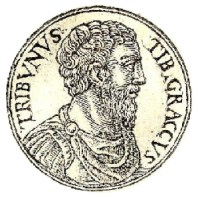 On March 17th, 180 CE, the Roman Emperor, Marcus Aurelius, died in a fortified military encampment near the Danube River where today the city of Vienna sits. Having spent years fending off a confederation of Germanic tribes, he finally achieved a decisive victory but did not live long enough to see that victory bear fruit. Marcus Aurelius was the last of the so-called “Five Good Emperors,” who gave to the world the Pax Romana, an extraordinary, and arguably unique, century of peace, order, and civilization. The historian, Edward Gibbon, famously said of this age:
 If the presidential inauguration of Donald Trump had been a TV show, it would have been cancelled after the first episode. By all objective measures, the latest of these quadrennial spectacles has turned out to be an historic flop. First-rate celebrity entertainers were conspicuously absent. The second-rate entertainers who were on display were embarrassingly amateurish. The parade of marching bands who filled out the truncated program would have been more at home on a high school football field. And the sight of Trump himself, stuffed into a tuxedo like a bloated pumpkin, struggling to dance with his wife without stepping on her toes or crushing her to death, was ridiculous when it wasn’t outrightly repugnant.
 Two days ago, in hundreds of towns and cities across the land, thousands of Americans gathered to protest the “election” of Donald J. Trump and, even more pointedly, to decry the looming repeal of the Affordable Care Act—an event that would deny health insurance to 30 million people and send insurance premiums rocketing skyward.
 Donald Trump held a press conference today, the first in more than six months. Like everything else Trump has done since he announced his candidacy eighteen months ago, it was a disgrace and a travesty—an act of political theatrics designed to aggrandize himself, to distract attention from his innumerable conflicts of interest, and to intimidate anyone who dares to question or oppose him.
 With the dismal year of 2016 behind us, and the uncertainties of the years ahead hanging over us like a glowering cloud, millions of Americans are facing the future with trepidation, anxiety, and dread. Muslim Americans worry that they will be forced to register like enemy aliens, will be spied upon, may even be banned; Hispanic Americans fear that a fist will soon pound on the door in the middle of the night and rip their families apart; African Americans are afraid that they will once again be stripped of their voting rights and their most basic civil rights, relegated to a new regime of subordination and humiliation; women are terrified that their long and hard-fought struggle to control their own bodies, make their own reproductive choices, and make a place for themselves in a world too long controlled by men will be swept aside; gay and lesbian Americans shudder to think that their basic humanity will again be denied, that they will be shamed, shunned, and shut away in a closet of social and legal ostracism. All these—our neighbors, our friends, our family members, our fellow Americans—are asking themselves whether there is any longer a place for them in their own country, whether their country is any longer the United States of America.
 In less than 24 hours, the real 2016 presidential election will take place. Not the mythical election in which the American people supposedly get to decide who their next president will be—but the real election in which an arcane and antiquated institution called the “electoral college” makes the actual decision. When the 538 members of the “electoral college” gather in their separate states tomorrow to cast their ballots, they will, in all likelihood, elect Donald J. Trump, defying, for the second time in 16 years, the will of a majority of the American people. In this case, that majority will amount to almost three million votes—an historical record. When this occurs (assuming that it does), it will be the culminating failure of a political institution that became obsolete almost on the day it was born and has now become completely moribund.
 It is now clear beyond any reasonable doubt that the Russians and Vladimir Putin intervened in the 2016 presidential election, not merely to discredit and destabilize our democratic institutions, but specifically to ensure that Donald Trump would defeat Hillary Clinton and become our next president. We have learned that the Russians hacked the servers of both the Democratic and Republican National Committees. They chose solely to leak agitprop damaging to the Democrats, using Wikileaks as their compliant mouthpiece. We do not yet know whether Russian intervention went further, extending to the manipulation of electronic voting records in the crucial swing states of Michigan, Wisconsin, and Pennsylvania. When the audits initiated by the Green Party candidate, Jill Stein, are completed, we may have an answer—or not. What we do know is that the Department of Homeland Security was sufficiently worried several weeks before the election to warn the states against the vulnerabilities of their vote-tallying mechanisms and to offer its help in protecting those mechanisms. Shamefully few states accepted that offer.
 When Fidel Castro died five days ago, after more than fifty years at the helm of Marxist Cuba, Canada’s charismatic prime minister, Justin Trudeau, lamented his passing, observing that Castro had been “a remarkable leader who served his people.” All hell immediately broke loose, less in Trudeau’s Canada than here, south of the border, in the United States.
