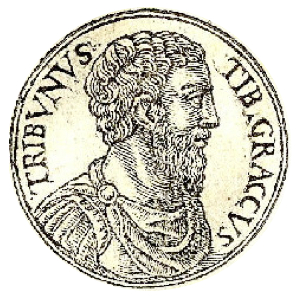
gracchusdixit

Two Thousand Years Ago, the Brothers Tiberius and Gaius Gracchus Sacrificed a Life of Privilege to Defend the Interests of the Roman People. They Were Murdered for Their Efforts.

Category: Uncategorized

Whose Life?

Tiberius GracchusThough it has been alluded to many times in these pages, the question of abortion has never been engaged directly.  That is because no other question is so tangled and troublesome, so difficult to think about in a clear and consistent way.  That may also be why American attitudes toward abortion have never settled, definitively, in one place.  Although most Americans support abortion under certain circumstances, few support it unconditionally.  Public opinion has been conflicted in this way for decades, leaving many people to wish that the subject would simply go away.

Well, it won’t go away—because it is now abundantly clear that the Republican Party is controlled by those who oppose abortion absolutely, unreservedly, under all circumstances.  In many states, Republican governors and legislatures are well on their way toward banning it.  If Republicans win the next national election, what their minions have already done in Texas and Tennessee, in Mississippi and Missouri, will be imposed upon all Americans, either by legislation or by executive fiat.

It is possible, of course, that the Supreme Court might then reaffirm its 1973 decision in Roe v. Wade, which established a conditional right to abortion on 14th Amendment grounds.  Given the conservative bent of today’s Court, however, such an outcome is by no means certain.  Women everywhere would then find themselves living again in the dark back alleys of the 1950s and 1960s—or worse.

The time has come, therefore, to stop skirting this contentious issue, and I do not intend to indulge in the familiar euphemisms that cloud, confuse, and sanitize the debate.  The debate isn’t about being “pro-life” or “pro-choice,” and it isn’t primarily about “women’s health”.  The debate is about abortion, plain and simple.

On both sides, inconsistencies abound.

Those who call themselves “pro-life,” despite all their sermonizing rhetoric, show scant concern for the sanctity of life in general.  Their concern ends with protecting the unborn.  If such people cared even a jot about the lives of women and mothers, they would espouse sex education, contraception, robust healthcare and universal childcare—and they would do so as zealously as they oppose abortion.  But they don’t support any of those things.  On the contrary, they in most cases vehemently oppose them.

More damningly, many “pro-lifers” are perfectly content to support the death penalty, despite overwhelming evidence that capital punishment is arbitrary, ineffectual and racist.  They excuse their muddled moral calculus by trying to distinguish between “innocent lives” and “guilty” ones, as if any of us had the right, or the wisdom, to judge the difference.

On the other hand, many of those who call themselves “pro-choice” insist on discussing abortion as if it were an anodyne medical decision without moral implications.  There is no doubt, of course, that abortion and health are intertwined, that pregnancy and childbirth can be dangerous, or that rape and incest inflict physical and psychological harm on their victims.  There is likewise no doubt that organizations which provide abortion services, like Planned Parenthood, do a great deal more.  But that is not the main consideration animating “pro-choice” advocates.  Their main purpose is to uphold the right of women to terminate pregnancies they either didn’t intend or don’t want.  To pretend otherwise may be rhetorically convenient, but it weakens the argument.

More consequentially, we have for decades wasted time and energy on tangents that distract our attention from the central conflict in this debate—because the conflict itself is so uncomfortable.

The call for “exceptions” for rape or incest is one of those distractions.  As loathsome as such crimes are, they have nothing to do with the fundamental question.  If a woman shouldn’t be forced to bear the child of an abusive rapist or relative, why should she be forced to bear the child of an abusive, absent or abandoned husband?  If she shouldn’t be compelled to live with the consequences of a crime, why should she be compelled to suffer the consequences of a tragic but altogether human mistake?  There are no convincing logical, legal, or moral justifications for such distinctions.

The battle over Roe v. Wade is another distraction.  In that ruling, the Supreme Court saddled us with a compromise that has never satisfied anyone. It declared abortion to be a personal decision protected by an implicit “right to privacy” under the 14th Amendment.  It simultaneously declared the state to have a legitimate interest in protecting life.  Before Roe v. Wade, the state’s interest began with birth.  After Roe v. Wade,  it began with “viability,” i.e., the moment when an unborn child has the “potential to survive” outside the womb, even if that potential must be assisted artificially.

Those who oppose abortion, evangelicals in particular, have never been satisfied by either facet of the Court’s compromise, and they never will be.  For them, life begins the moment a sperm meets an egg, and all other rights must be subordinated to what they believe to be the “sanctity of conception”.    To justify this belief, they invoke Biblical writ and, when that doesn’t work, every bit of pseudo-science they can lay their hands on.

Those who support abortion have never been satisfied by the Court’s Solomonic compromise, either.  For them, the decision whether to give birth is indivisibly private, and any limitation makes a mockery of the “right to privacy” which the Court enshrined.  For the Court to have invoked “viability” as a limiting factor is not only unacceptable, it is deceptive in both medical and practical terms.  What “viability” may have meant in 1973 is undoubtedly different today and in all likelihood will be different in the future.   To accept this limitation would mean that the “right to privacy” isn’t a right at all but, rather, an endlessly negotiable commodity.

What the Supreme Court failed to recognize in 1973, and what most Americans fail to recognize today, is that the fight over abortion isn’t a fight over two rights that can be calibrated, compromised, or balanced.  It is a fight over two conflicting rights—and upholding the one means sacrificing the other.

Nearly 70 years ago, the British philosopher, Isaiah Berlin, stated the problem more succinctly than anyone before or since:

The world that we encounter in ordinary experience is one in which we are faced with choices between ends equally ultimate, and claims equally absolute, the realization of some of which must inevitably involve the sacrifice of others. 

Until we understand that a choice between “ends equally ultimate, and claims equally absolute” requires sacrifice, until we are once and for all prepared to make the sacrifice this choice requires, the debate over abortion will never end.  Either that, or the rights of women will be sacrificed to those who believe that women have no rights.

To give them their due, those who oppose abortion know where they stand.  Those who support abortion should stand no less firmly against them.  Sometimes, there is no middle ground.  This is one of those times.


Blessed

Tiberius GracchusThe first Republican Presidential primary debate is now behind us—thank God—and it was, as almost everyone predicted, dominated by the larger-than-life specter of Donald Trump.  Trump himself got more “face time” on the stage than any other candidate, in part because the moderators appointed by Fox News Channel, fairly or unfairly, focused much of their energy on grilling him.  How he held up under their fire depends on who you talk, or listen, to.

It wasn’t Trump, however, who got the biggest round of applause from the Republican faithful sitting in the audience.  That honor went to Senator Marco Rubio of Florida, when he quipped:

Well, first, let me say I think God has blessed us.  He has blessed the Republican Party with some very good candidates.  The Democrats can’t even find one.

Nothing so reliably brings Republicans to their feet than a shot over the bow—or under the belt—at the likely Democratic nominee, Hillary Rodham Clinton.

The more consequential fact is that so many people on both sides of the political divide agree with at least part of Rubio’s remark, i.e., the proposition that the Republican Party does indeed have “some very good candidates”.  Even Rachel Maddow, the most-watched personality on left-leaning MSNBC, has often said as much, referring to the “serious” contenders who populate the Republican field.

That, of course, depends on what you mean by “serious”.  If the sole criterion is a resumé, then I suppose people like Rubio and Maddow have a point.  There were three sitting Senators on the stage in Cleveland and five current or former governors.  Even the “happy hour” debate that came earlier in the day was populated by six current or former public officials and the one-time CEO of what used to be America’s leading technology company—though to be fair, it must be noted that Hewlitt-Packard fell from that perch on Carly Fiorina’s watch.

If, on the other hand, “serious” means “serious ideas,” then the Republican Party, rather than blessed, is cursed.

Reading the transcript of the debate—which I have done and would recommend to no one who has anything even remotely better to do—is a bewildering and depressing experience.  It is nearly impossible to find in that dismal text one convincing idea.  Indeed, it is all but impossible to find a coherent English sentence coming from anyone other than Fox News Channel’s moderators, Brett Baier, Megyn Kelly, and Chris Wallace.  Whatever you may think of their views, they at least have the ability to string two words together.  The same cannot be said of the candidates who spent several hours struggling to answer their questions.

In recounting the nonsense that came out of their mouths, it is hard to know where to begin.  On the subject of immigration, for example, which animates the rabid Republican base like no other issue, the idiocies and inaccuracies were pervasive.  The aforementioned Rubio was the most vapid:

This is the most generous country in the world when it comes to immigration.  There are a million people a year who legally immigrate to the United States, and people feel like we’re being taken advantage of.  We feel like, despite our generosity, we’re being taken advantage of.

While it is true that a “million people a year” legally immigrate to the United States, we also happen to be a country with a population of more than three hundred million.  Compared with other, much smaller countries, the number of immigrants we admit is anything but “generous”.  On a percentage basis, tiny Luxembourg, with a population less than half the size of The Bronx, welcomes six times as many.

To give him his due, Jeb Bush tried to be more rational:

I believe that the great majority of people coming here illegally have no other option.  They want to provide for their family. 

Bush’s subsequent comments, alas, descended into incoherent and inconsistent nonsense, as he tried to reconcile simple compassion with the senseless animus of the Republican electorate.

They became worse than incoherent—they became downright dishonest—when he turned to the mess in the Middle East:

Barack Obama became President, and he abandoned Iraq.  He left, and when he left, Al Qaida was done for.  ISIS was created because of the void that we left, and that void that we left now exists as a caliphate the size of Indiana.

The last time I looked, it was Jeb’s brother, “Dubya,” whose lies got us into the mess in Iraq in the first place and Barack Obama who finally caught up with Osama Bin Laden and began trying, however fitfully, to get us out.  Jeb and the neo-cons who surround him can try to rewrite history all they want, but that won’t change the facts.

More ridiculous still were the comments of Mike Huckabee and Scott Walker regarding abortion rights.  From Huckabee came these lofty pronouncements:

I think the next president ought to invoke the Fifth and Fourteenth Amendments to the Constitution now that we clearly know that that baby inside the mother’s womb is a person at the moment of conception. The reason we know that it is because of the DNA schedule that we now have clear scientific evidence on.

I suppose it’s possible that the former governor of Arkansas has never actually read the Constitution.  If he did, he would find that the two Amendments he cites apply solely to persons who qualify as “citizens” of the United States either by birth or naturalization.  Like it or not, you can’t be a citizen if you haven’t been born.  No “DNA schedule” in the world can change this inconvenient reality, because there is no such thing as a “DNA schedule,” which is a fiction of Mike Huckabee’s own devising.

Scott Walker, for his part, didn’t even bother with Constitutional niceties or make-believe science:

Well, I’m pro-life, I’ve always been pro-life, and I’ve got a position that I think is consistent with many Americans out there in that I believe that that is an unborn child that’s in need of protection out there, and I’ve said many a time that that unborn child can be protected, and there are many other alternatives that can also protect the life of that mother. That’s been consistently proven.

The only thing that’s been “consistently proven” is that Walker seems to care solely about protecting an “an unborn child” regardless of any risks to the life of its mother.  The “other alternatives” he refers to simply don’t exist.

Looniest of all was Ben Carson, who doesn’t even have a political resumé to fall back on.  When it came to the question of reforming our Byzantine tax code, designed to favor the wealthy at every turn, he invoked his own version of Biblical writ:

What I agree with is that we need a significantly changed taxation system.  And the one I’ve advocated is based on tithing, because I think God is a pretty fair guy.  And he said, you know, if you give me a tithe, it doesn’t matter how much you make.  If you’ve had a bumper crop, you don’t owe me triple tithes.  And if you’ve had no crops at all, you don’t owe me no tithes.  So there must be something inherently fair in that.

It may well be that “God is a pretty fair guy,” but as much as I’ve tried, I’m afraid that I’ve been unable to find the phrase, “bumper crop,” in the Old or New Testaments.  On the other hand, since Carson, like Mike Huckabee and Ted Cruz, seems to speak with the Almighty on a regular basis, he may know something that less favored mortals do not.

I could go on, of course.  But you get the point.  While there may have been ten candidates on the stage in Cleveland this week, there wasn’t a “serious” person, with a “serious” idea, among them.  If one of these buffoons is “blessed” enough to get elected, it will be a curse for the rest of us.

All Hail to Ailes

Tiberius GracchusRoger Ailes is one of the few executives in the history of network television to have become what passes, in our celebrity-crowded world, for a household name.  Ailes is the President —though “absolute monarch” might be the more fitting term—of Fox News Channel.  In a breathtakingly short period of time, the network Ailes all but created has transformed the television news business, becoming the most influential voice on the Republican, and perhaps the national, political stage.  Any conservative politician, pundit, or power broker who wants to tap into that influence, or avoid its wrath, has no choice but to come shuffling to Mr. Ailes, head bowed, hat in hand, humbly begging for favor.  Within the global media empire of Rupert Murdoch, there is of course only one king—Murdoch himself—but there are many princes.  Ailes towers over them all, primus inter pares.

In the last couple of months, however, Roger Ailes and his network have found themselves at the center of a storm, as if the sea god Poseidon were being buffeted by one of his own tempests.  Ailes and Fox News Channel have been assailed for a decision to limit tonight’s televised Republican primary debate to the top ten contenders, as defined by a series of national public opinion polls, consigning the rest to a so-called “candidates’ forum,” which will appear earlier in the day when nobody but the aged and the unemployed are likely to watch.  This decision has been lambasted not only by the unlucky candidates who will be sitting at the “kids’ table” tonight but also by countless others on both sides of the political divide.

The unlucky candidates who have no hope of making the cut have resorted to every sort of stunt—mass emails to Republican faithfuls, embarrassing attempts to produce “hip” videos on YouTube, shameful begging on national public affairs programs like “Meet the Press”—all in the hope of pressuring Mr. Ailes to change his mind.  Thus far, none of these antics has shown even the slightest sign of succeeding.

The pundits and media critics, as is their custom, have been more pompous and self-righteous in their condemnations, deploring what they deem to be a scandalous usurpation of democracy itself by, of all things, a cable television network.  What could be worse?

Most pathetic of all are Republican officials in the states of Iowa, New Hampshire, and South Carolina, who have been hollering like stuffed pigs, fearing that their states may lose their completely undeserved preeminence in our unconscionably protracted electoral process—a preeminence they “earned” simply by scheduling their primaries earlier than anyone else.

All of this complaining and caterwauling—if you will forgive me for putting it so crudely—is complete and utter bullshit.

There may be many reasons to think ill of Fox News in general and Roger Ailes in particular.  But this isn’t one of them.  In this instance, the only reasonable thing to say is that Mr. Ailes and his network are saving the country from a great deal of needless bother.

To begin with, there are 17 declared Republican candidates.  Fewer than a handful have a sinner’s chance in hell of becoming the nominee of their party, let alone the next President of the United States.  The sooner the complete duds—who, needless to say, number rather more than a handful—are eliminated, the better it will be for all of us.

Even those who might otherwise agree with this proposition have nonetheless criticized Fox News for using national polls to winnow the field, for separating plausible fools from feckless idiots.  While there is no doubt that polling is an imperfect process, riddled with flaws and limitations, what alternative would the critics suggest?  A lottery?  A flip of the coin?  Names drawn randomly from a hat?  Perhaps a political version of “Lost” or “America’s Got Talent”?

The only plausible alternative, in truth, would be to put all 17 circus clowns on the stage and let each scramble for his or her 15 seconds of fame.  That wouldn’t be a debate.  It wouldn’t even be an entertaining circus.  It would be an unwatchable shambles.

The whining of officials in Iowa, New Hampshire, and South Carolina over the loss of their preeminence in our loony electoral system is more ludicrous yet.  Whatever their charms, these little, idiosyncratic states bear no resemblance whatsoever to the American electorate.

The Iowa caucuses are a crazy anachronism, dominated by hog-farming evangelicals.  The flinty independence of New Hampshire, though quaintly appealing in a Norman Rockwell sort of way, is a distracting throwback to a long-gone age.  And the righter-than-right-wing predilections of South Carolina reflect neither democracy nor common decency.  It was South Carolina, after all, that fired the first shots in the Civil War.  That alone should have disqualified the state from any future role in our national politics.

In upending all this nonsense, Roger Ailes and Fox News Channel have done the nation a great service.  They have exposed the foolishness of our political process.  They have revealed, at long last, how the Republican Party really works.  They have shown us that democracy has nothing at all to do with Republican politics.

All Hail to Roger Ailes!  He may not be the king of the Murdoch media empire.  He is without doubt or question the kingmaker of the Republican Party.

Big Lies, A Big Liar

Tiberius GracchusDonald John Trump’s official announcement that he intended to run for the Republican Presidential nomination—after years of faux flirtation with the idea— provoked immediate and incredulous guffaws from the chattering classes.  How, they opined, could anyone possibly take Trump seriously?  All that hair, all that shameless self-promotion, all that braggadocio and bluster—surely such extravagant nonsense and bad taste would rule him out as a credible candidate.

But then the poll results began to roll in, and lo and behold, “the Donald” had soared to the top of the laughably long list of Republican hopefuls, besting even the presumptive front-runner, His Royal Highness Jeb Bush.  This left the pundits and prognosticators gaping in slack-jawed wonder, as they tried to rationalize a phenomenon they clearly could not fathom.

Some attributed Trump’s rise to simple name recognition, the result of years spent as the host of two low-rent television reality shows.  Others searched for an answer in the admiring envy many ordinary people feel for Trump’s purported financial success and business acumen.  Still others speculated, more charitably, that Trump is genuinely voicing the concerns of a certain segment of the Republican electorate, which does not trust other candidates to speak for them.

All these factors may well play their parts, but they do not explain the fundamental reason for Trump’s ascendancy.  That reason is much simpler.

The reason for Trump’s rise is that he is a consummate liar.  Indeed, “the Donald” has turned lying into an art form.

Trump never deigns to provide evidence to back up his outrageous claims.  He never condescends to cite facts.  He merely asserts what he would have others believe, ignoring, or steamrolling, anyone who presumes to correct him.

The lies begin with Trump himself.  He claims to be worth more than nine billion dollars, offering no proof except a piece of paper.  The last public audit of his financial condition occurred nearly twenty years ago, when he was several hundred million dollars in the red.  Since then, he has kept everyone guessing, and the disclosure he recently filed with the Federal Elections Commission did little to end the guesswork.  The only certainty is that, whatever Trump is actually worth, it isn’t nine billion dollars or anything even remotely close.

Then, there are the more consequential lies.  Trump continues to insist, for example, that he doesn’t know where Barack Obama was born, despite the fact that the President’s birth records were made public long ago.  He claims that Hillary Clinton was the “worst Secretary of State in history,” despite the fact that such a thing is unknowable.  He asserts that our border with Mexico is a “sieve,” despite the reality that we have more border agents than ever before and levels of illegal immigration have plummeted.  He proclaims that immigrants are flooding the country with crime and “infectious disease,” despite a total absence of evidence to support such canards.  And finally, he declares that he has a sure-fire plan for ridding the world of the Islamic State, without so much as a hint of what that plan might be.

“The Donald” is by no means the first to have mastered the art of the big lie.  On the contrary, he is merely following in the footsteps of the spiritual father of all gargantuan liars:

in the big lie there is always a certain force of credibility; because the broad masses of a nation are always more easily corrupted in the deeper strata of their emotional nature than consciously or voluntarily; and thus in the primitive simplicity of their minds they more readily fall victims to the big lie than the small lie, since they themselves often tell small lies in little matters but would be ashamed to resort to large-scale falsehoods. It would never come into their heads to fabricate colossal untruths, and they would not believe that others could have the impudence to distort the truth so infamously…a fact which is known to all expert liars in this world and to all who conspire together in the art of lying.

The man who wrote those words was the most accomplished liar in history—Adolph Hitler.

The secret of Trump’s particular success, however, goes beyond the fact that his lies are “colossal.”   The secret is that his lies, like Hitler’s, are circular.  There is nothing new in the whoppers he tells; they merely reflect the falsehoods his audience already believes.  By pandering to existing prejudices, he confirms them, reinforcing his own credibility with the credulous.  In short, the more Trump lies, the more convincing he becomes to those who want to believe him.  That is why he now leads the Republican pack.  That is why, however unlikely it seems, he just might win.

Before You Speak, Know Whereof You Speak

Tiberius GracchusOne of those who read the last Gracchus, which concerned itself with the financial crisis in Greece, complained:

One of the keys to poor journalism is to say things like this does (sic): ‘The EU austerity program had decimated (sic) the Greek economy.’  Greece has and has had an unsustainable economy and political and socialist-like system.  It got the subsidies and loans in the first place because of that.  Greece people (sic) do not often pay their taxes, for example…try that in the USA.

To which I can only respond by quoting the late Daniel Patrick Moynihan: “Everyone is entitled to their own opinions, but they are not entitled to their own facts.”

To begin with, it should be obvious by now that the utterances of Gracchus are not, and do not pretend to be, “journalism”.  They are expressions of opinion regarding political, economic, social, and religious questions.  But the opinions expressed are grounded in facts.

And regarding Greece, the facts are these:

The Greeks elected their first socialist government in January of this year.  Before that, a conservative government had held power for four years, and in the fourteen years since Greece joined the eurozone, conservative governments held power for eight.  Indeed, a conservative government was running the country when the global financial meltdown occurred in 2007, precipitating the current crisis.

Since austerity was imposed on Greece five years ago, with the promise that growth and financial stability would follow, GPD has declined 25 percent, the country’s debt to GDP ratio has increased more than 70 percent, unemployment has tripled, and per capital income has declined 20 percent.  As a result, one in five Greeks now lives in a household with no income at all, one in three lives at or below the official threshold of poverty, and the country as a whole is functionally bankrupt.

These consequences shouldn’t be surprising, since ninety percent of the so-called “subsidies” Greece has received from the International Monetary Fund and the European Central Bank have gone to rescue the country’s creditors from their own improvident and risky lending decisions rather than benefitting the Greek economy or the Greeks themselves.

That shouldn’t be surprising, either.  Similar interventions in Spain, Portugal, Italy, and Ireland have only made matters worse.  In fact, the International Monetary Fund’s theology of budget-cutting, privatization, and debt-repayment has for decades failed to produce economic growth almost everywhere it has been tried.

None of which is to suggest that Greece bears no responsibility for its own problems.  As I stated in the original Gracchus, the Greek economy needed, and still needs, reform, particularly to its troubled tax regime.  In that regard, however, Greece is not alone, nor is “try that in the USA” a particularly relevant or useful observation.  As in Greece, so in the United States: many of our largest corporations and wealthiest individuals avoid paying taxes altogether by sheltering their earnings in foreign tax havens, often quite illegally; many more game the system quasi-legally to pay far less than they owe.  If we expect the Greeks to reform their tax code, as we reasonably should, we might provide a more helpful example by doing the same.

Finally, let me say this.  It is widely believed (particularly in Northern Europe) that the Greeks are lazy slackers who’ve been living a pampered existence on somebody else’s nickel.  The truth is otherwise.  The average Greek works more than 2,000 hours per year.  That’s more than the British, more than the Dutch, more than the industrious Swiss, far more than the sanctimonious Germans, and, yes, more than notoriously overworked Americans.  Greece has many problems, but laziness isn’t one of them.

For all these reasons, the Greek people voted a resounding “oxi”—”no”—to another toxic dose of voodoo economics.  Instead of lamenting that decision, the judgmental power-brokers of Europe and the United States should listen.  They might actually learn something.

Dark Days for Democracy

Tiberius GracchusGreece, where the first seeds of democracy were sown more than two thousand years ago, is known around the world as a land of azure seas and bright, sunlit skies.  When the sun rose over Athens Monday morning, however, the mood was anything but bright.  The banks did not open as they usually do.  They were shuttered and closed, and will stay that way for another week.

It is then that the Greek people will go to the polls to decide their future in a national referendum.  They will be voting whether to accept the latest round of “reforms” demanded by the so-called “troika” of financial institutions—the International Monetary Fund, the European Commission, and the European Central Bank—that have it in their power to make or break the Greek economy.  If the Greeks say yes, Greece will remain within the European Union and retain the euro as it currency.  If they say no, Greece will default on its debts, abandon the euro, and almost certainly leave the EU.

Neither of these choices is in any way palatable.

By accepting the terms the troika demands, Greece will get another financial lifeline.  But that lifeline will do little to help the Greeks themselves.  Most of the money will go to pay the country’s creditors—primarily banks and bondholders in Germany and France—condemning the Greeks to more years of austerity, unemployment, and depression.

Should Greece reject the troika’s demands, it will go its own way, shedding its burden of debt, but shunned by investors and the financial institutions of Europe.  Years, perhaps decades, will pass before the country is able to get on its feet again, if it ever does.

Let it be said that Greece needed genuine economic reform and needs still more.  Its bureaucracy was bloated, many of its industries were inefficient, and its tax regime was riddled with corruption.  Nonetheless, during the last five years, Greece has done everything the “troika” has demanded.  It has slashed spending, sold off public assets to private investors, and all but eliminated its budget deficit.  The Greek people were told that, if their government did these things, all would be well, growth would return, and prosperity would follow.

That didn’t happen.  Instead, the austerity measures imposed by the “troika” have devastated the Greek economy, as such measures have done to so many other countries in the past.   Overall unemployment is 25 percent, youth unemployment exceeds 60 percent, and economic activity has shriveled.  Now, Greece can no longer pay even the interest on its debts for the simple reason that it doesn’t have the money.

None of this has been enough to persuade the bankers in Brussels, Berlin, and Paris to change their minds let alone abandon the economic “medicine” that is poisoning the Greek economy.  The latest “reforms” demanded by the troika call for Greece to privatize its airports, sell off its publicly owned electric company, and expand the VAT, or sales tax, to include basic necessities like food and heating oil—a burden that will fall on those who can least afford it.  Worse yet, Greece’s creditors are calling for more than a balanced budget.  They are demanding a surplus, a bigger surplus next year, and an even bigger surplus in the years to come.  This is something that no nation in the midst of a full-scale depression has ever been able, or asked, to do.

And it won’t solve the problem.  Whether Europe’s power brokers like it or not, the sad truth is that Greece is bankrupt.  The only practical and decent solution is to write off part or all of its debt, let the banks to swallow their losses, and give the Greeks a chance to begin all over again.  We did this for Germany after the First World War, and we did it again after the Second.  There is no reason it cannot be done again, for Greece.  And if it were done, the impact on the global financial system would be very close to nil.  The Greek economy is half the size of Connecticut’s and one twentieth the size of California’s.  Its debts scarcely equal the net worth of the Walmart heirs, who could pay the interest on that debt without noticing it.

In truth, the motives of the troika have nothing to do with practical economics or common decency.  They are entirely political.

Six months ago, the Greeks elected a socialist government, which vowed to end the austerity that has crippled the country.  To people like Jean-Claude Junker, the head of the European Commission, this state of affairs cannot be allowed to stand.  He has accused the Greek prime minister of “betrayal” for daring to call a referendum instead of passively accepting the dictates of the EC and other members of the troika.  Junker and the European financial elite are quite simply out to topple the democratically elected government of Greece, not because it is wrong but because it is defiantly right.

No one knows how the Greeks will vote next week.  All we do know is that the Hobson’s Choice they are being forced to make is unpalatable, unnecessary, and morally reprehensible.  For the people of Greece, for the survival of democratic government in the land where democracy was born, the days ahead promise despair rather than hope, darkness rather than light.

Whatever It Takes

Tiberius Gracchus

By a decisive 6-to-3 vote, the Supreme Court of the United States has, for the second—and, one can only hope, the last—time, upheld the constitutionality of the Affordable Care Act against a challenge from its die-hard opponents on the far right.  In this instance, the majority rejected the argument of the plaintiffs in King v. Burwell—a transparently frivolous law suit instigated and subsidized by the Koch brothers—claiming that a single sloppily written clause in the Act invalidated the whole.

The clause in question, which appears in Section 36b of the Act, stipulates that federal subsidies be provided to those who enroll in insurance “exchanges established by the State”.  Taking “the State” to mean “the States,” the plaintiffs argued that no subsidies can legally be provided in any state which declines to set up its own exchange, relying on the federal exchange instead.  Without federal subsidies, of course, millions would lose their insurance, and the Affordable Care Act would very likely collapse.

From the beginning, it was clear to most legal experts that the argument of the plaintiffs was factually incorrect and absurd.  No legislator involved in crafting the law, either Democrat or Republican, has ever said that such an exclusion was contemplated, because to have done so would have doomed the Act to failure.  What’s more, numerous references to federal subsidies appear elsewhere in the Act and are unambiguous with respect to its intent—that all citizens should be able to obtain affordable health insurance, whether in state-run exchanges or in the exchange run by the federal government.  The language of Section 36b is unquestionably sloppy, but it could scarcely be considered a statement of legislative purpose, let alone decisive in determining the fate of the Affordable Care Act as a whole.

Chief Justice Roberts—who, despite his conservative inclinations, cast the deciding vote in upholding the ACA against its first challenge—put the matter succinctly:

Congress passed the Affordable Care Act to improve health insurance markets, not to destroy them. If at all possible, we must interpret the Act in a way that is consistent with the former, and avoids the latter. Section 36b can fairly be read consistent with what we see as Congress’s plan, and that is the reading we adopt.

You might imagine that this straightforward expression of common sense from an otherwise staunchly conservative Chief Justice would have put an end to the debate once and for all.

It did not, however, satisfy the infinitely irascible Antonin Scalia or his sclerotic conservative colleagues, Joseph Alito and Clarence Thomas.  Scalia’s dissent was more sarcastic than usual—which is saying something, given the glib and arrogant contempt he routinely showers on any judgment with which he disagrees.  This time, Scalia went beyond his customary logic-chopping and got personal.  He accused the majority of being “prepared to do whatever it takes to uphold and assist its favorites,” in other words, of bending the law to fit their purported ideological purpose.

Coming from anyone else, this would be laughable.  Coming from Scalia, it is nothing less than ludicrous.

It was Scalia who, nearly twenty years ago, wrote a book called “A Matter of Interpretation,” in which he set out to provide a comprehensive theory of how the Federal Courts should interpret statutes, i.e., laws passed by legislative bodies.  He argued that courts should stay clear of trying to determine “legislative intent,” which he judged to be unknowable and in any event irrelevant.  He proposed, instead, that judicial interpretation should focus exclusively on what a given law says—or “promulgates”.  In Scalia’s view, nothing else matters: not history, not legislative process, not the intentions of the lawmakers, not the needs or problems a given law hopes to address.   The only thing that counts is the language of the law itself.   The name he gave to this interpretative theory was “textualism”.

Even if you accepted this dubious proposition, you’d still be left with the question: what happens when the “text” of a law is ambiguous or even contradictory, when, as is most certainly the case in the Affordable Care Act, one part of a statute appears to conflict with another?

In such cases, Scalia declared, “Context is everything.”  In other words, the totality of a law must guide the interpretation of its particular details—all the more so when any of those details are unclear.  Regarding which, Scalia went on to observe: “The Constitution tells us not to expect nit-picking detail, and to give words and phrases an expansive rather than narrow interpretation.”

The man who wrote these words, the man who claims to venerate text and context above all else, is the same man who chose to ignore his own “interpretative theory” by disregarding the clear context of the Affordable Care Act.  If anyone can rightfully be accused to doing “whatever it takes” to uphold and assist favorites,  of bending the law to suit an ideological purpose, it isn’t the majority in King v. Burwell, it is Antonin Scalia.

The Hypocrisy of Hate

Tiberius GracchusIn the wake of last week’s dreadful murders in Charleston, South Carolina, the Republican governor of that state, Nikki Haley, stood before the microphones and television cameras to make this tearful and emotional statement:  “We have some grieving to do,” she intoned, “and we’ve got some pain to go through.  We are a strong and faithful state.  We love our state, we love our country, and most importantly, we love each other.”

If only these words were true.

Nikki Haley, like so many Republican politicians who rushed to condemn the slaughter of nine innocent black citizens as they were reading scripture in Charleston’s historic Emanuel Church, is at best a hypocrite and at worst a de facto accomplice to the hateful murders she purports to condemn.  If Nikki Haley truly loved our country, if she honestly wanted all the citizens of her state to love each other, then she would confess her guilt and repent of her ways.  That is unlikely.

For nearly 40 years, the Republican Party has preyed on the fears, resentments, and prejudices of white Americans in general and Southern whites in particular.  Instead of denouncing those prejudices, they have perpetuated them, refusing to acknowledge, let alone take responsibility for, their own role in inflaming the stubborn racism that continues to bedevil our country.

Nikki Haley, and others like her, have excused the ongoing display of the Confederate battle flag in South Carolina’s capitol and elsewhere throughout the Old South, rationalizing this display as an expression of “cultural heritage,” when it is nothing less than an open and deliberate affront, not only to African-Americans, but to every decent person in the land.  Her decision to remove that flag, in the face of mounting pressure, came too late to save the lives of the worshippers gunned down in Charleston.  Even then, she failed to acknowledge what that flag really stands for: racism, secession, and treason.

Symbolism aside, Republicans like Halley have defended, indeed expanded, the unfettered ownership of guns, allowing them to be used, as they have for generations, to terrorize and kill helpless and law-abiding citizens of color.  They have justified the worst abuses of minorities by the police, demonizing those protesting those abuses as “thugs” who deserve to be rounded up and jailed.  They have insisted on the continued imposition of the death penalty in the face of overwhelming evidence that it not only fails to deter crime but kills countless innocent people, most of them black or brown.  And finally, they have maligned the President of the United States as an illegitimate alien, not because that is even remotely true but, rather, because he is black. From the day Barack Obama was elected, Republicans like Nikki Haley vowed to bring him down even if that meant tearing the country apart.

Since that January day 152 years ago on which Abraham Lincoln freed the slaves, we have made undoubted progress toward racial equality.  But not nearly enough.  The 13th Amendment may have abolished the institution of slavery, but it has not ended the subjugation of those whose forebears were slaves.  The 14th Amendment may have given all Americans equal protection under the law, but it has not prevented officers of the law from ignoring the very laws they are sworn to uphold.  The Civil Rights Act of 1964 may have ended legalized discrimination, but it has not ended de facto discrimination in housing, education, the workplace, and the courts.

And thanks to Republicans like Nikki Haley, even the fitful and partial progress we have made in the last 152 years is now in jeopardy.  Affirmative action has been dismantled.  Minority voting rights are being suppressed.  Police officers continue to go free after committing even the most egregious crimes.  Murderers like 21-year-old Dylan Roof are dismissed as deviant exceptions instead of being acknowledged as the all-too-typical racists they actually are.

It was the Great Emancipator who addressed these words to the nation as the carnage of the Civil War was coming to an end:

Fondly do we hope, fervently do we pray, that this mighty scourge of war may speedily pass away. Yet, if God wills that it continue until all the wealth piled by the bondsman’s two hundred and fifty years of unrequited toil shall be sunk, and until every drop of blood drawn with the lash shall be paid by another drawn with the sword, as was said three thousand years ago, so still it must be said “the judgements of the Lord are true and righteous altogether.

It is deeply ironic, and even more deeply tragic, that today’s Republicans are so determined to ignore the greatest Republican President in our history.  They are hateful hypocrites one and all, and we can only hope that they too will someday face the righteous judgment of the Lord.

What Kind of Catholics?

Tiberius GracchusPope Francis the First, the spiritual leader of the world’s more than one billion Roman Catholics, just took the unprecedented step of issuing an encyclical, which he called, after the words of Saint Francis of Assisi, “Laudato Si,” or ”Praised Be”.  In this letter of guidance to the faithful, he proclaimed climate change to be a fundamental threat to all living creatures and to “our common home,” the earth itself.

The Pope went further.  He dared to say what every thinking person knows down deep but few have been brave enough to put into words:  the root of the problem is a “sinful” economic system that encourages so much wasteful consumption by the wealthy few that the earth on which we all depend may soon be poisoned and sucked dry.  Urging us to recognize not only the limits of the natural world but the desperate needs of the poor, Pope Francis quoted Leviticus: “And you shall not strip your vineyard bare, neither shall you gather the fallen grapes of your vineyard; you shall leave them for the poor and for the sojourner.”

It scarcely needs saying that the Pope’s words did not sit well with the defenders of  the global economic order or with Republican pundits and politicians in the United States.  That professional gas-bag, Rush Limbaugh, did his usual huffing and puffing, accusing the Pope, as he has done several times in the past, of being a Marxist.  That unrepentant idiot, Senator Jim Inofe of Oklahoma, asserted, once again, that no scientific evidence exists to support the “theory” of climate change.  And that preposterous demagogue, Ted Cruz, gave us this more than usually preposterous comment:

He clearly doesn’t understand the true meaning of Christianity.  I’m not sure what kind of socialist upbringing he’s had, but true Christian principles are found in taking from the poor—not giving to them.  How will the poor ever better themselves if we don’t make them work for it, at a very low paying wage?  We can’t continue to let Obamacare corrupt the Pope, which it clearly has.

Whatever else you may think of Ted Cruz, you have to give credit where credit is due.  Never has so much utter nonsense been squeezed into a single paragraph of English prose.

Comments such as these are in no way surprising, since they come from the usual ranters and ravers, who can be relied upon to deny any moral, historical, or factual truth that conflicts with their prejudices and preconceptions.  It is easy for these buffoons to denounce the Pope, because they are under no spiritual obligation to pay attention.  Inofe and Cruz are evangelical Protestants, and  Limbaugh’s only religion is the almighty dollar.

However, things are more complicated for Republicans who also happen to be Catholics, for people like Jeb Bush, Marco Rubio, and Rick Santorum.  In reacting to the words of Pope Francis, all three have twisted themselves into such intellectual knots that it would be tempting to laugh if the subject were not so urgent and serious.

Of the three, Marco Rubio was the wiliest:

I have no problem with what the Pope did.  He is a moral authority and as a moral authority is reminding us of our obligation to be good caretakers of the planet.  I’m a political leader and my job as a policymaker is to act in the common good.  And I do believe it’s in the common good to protect our environment.  But I also believe it’s in the common good to protect our economy.

That sounds reasonable enough until you consider the problem that Rubio chooses to ignore:  you can’t have your cake and eat it too; you can’t protect the environment if you continue to perpetuate the economic system that is destroying the environment; sooner or later, you have to make a choice.

Jeb Bush was characteristically clumsier and even less logical:

I think religion ought to be about making us better as people, less about things that end up getting into the political realm…I don’t get my economic policy from my Bishops or my Cardinals or my Pope.

To state the obvious: personal and political behavior cannot be separated; you cannot be a “better person” in private all the while you pursue public policies that make life worse for society at large.  Since the policies Mr. Bush espouses have made life worse for millions of ordinary people here and elsewhere, perhaps he could learn a thing or two from his Bishops, his Cardinals, and his Pope.

Rick Santorum’s reaction was, as you might expect, just plain stupid:

We are probably better off leaving science to the scientists, and focusing on what we are really good at, which is theology and morality.

It appears to have escaped Santorum’s notice that the “theology and morality” of his church, the Roman Catholic Church, have for centuries concerned themselves with economic and social justice, with disparities of wealth and the plight of the poor, with the mutual obligations all human beings have to one another.  For the most sanctimonious candidate in the Republican field to ignore this long and venerable tradition is worse than stupid; it is absurd.

In the end, it has to be asked: what kind of Christians do these people imagine themselves to be when they ignore the Gospels and the teachings of their own church?   If they will not heed the Vicar of Christ, exactly what kind of Catholics are they?

A Dangerous Idea

Tiberius GracchusThe French philosopher and journalist, Emile Chartier, once observed: “Nothing is more dangerous than an idea when it is the only one you have.”  For two hundred years, we have been in the thrall of one, overpowering idea that is not only dangerous but fraudulent.  That idea is the notion that the “neoliberal” economic system, a.k.a., global capitalism, is the only way the world can work, as if our current economic arrangements were like the laws of physics or biology—inexorable and utterly beyond our control.

We have Adam Smith, the spiritual father of capitalism, to thank for this.  It was Smith who first conjured up the fairy tale of the “invisible hand,” with its implication that “the market” is somehow part of the divinely ordained fabric of the universe.

Thanks to Smith, the proponents of neoliberalism never tire of telling us that the central characteristics of global capitalism—lower wages, cut-throat competition for jobs, the relentless pursuit of profit—are simply the way the world works and will always work.

Neoliberal philosophers go further, claiming that prosperity and personal freedom are inseparable from the “free market” and “free trade,” that we cannot have the one without accepting the other.  Never mind that you won’t find one word about the “free market” or “free trade” in the Declaration of Independence, the Constitution of the United States, or the Bill of Rights.

Neoliberal historians would like us to believe that global capitalism is single-handedly responsible for the innumerable scientific, technological, and medical advances of the last two hundred years, that without capitalism we would still be living in the Dark Ages, that all progress depends on accepting and expanding  the economic system they revere.  Never mind the fact that capitalism had nothing whatever to do with the discoveries of Galileo or Copernicus, Marie Curie or Albert Einstein, William Harvey or Jonas Salk.

Neoliberal politicians assert that property rights are indistinguishable from human rights, that every encroachment on the one—in the form of redistributive taxes, social welfare, organized labor, or public regulation of business—is a violation of the other.  Never mind the obvious moral distinction between property and people, between a bank account and a human being.

Neoliberal “reformers” lecture us that our public schools are bankrupt, that they are failing to prepare our children for the “jobs of the future,” as if the only purpose of education were to train diligent, productive, and compliant workers.  Never mind outmoded ideas like intellectual growth, informed citizenship, or the sheer love of learning,

Neoliberal institutions like the International Monetary Fund and the World Bank never tire of demanding that entire nations must, if they want to survive, tow the line, slash public spending, “liberalize” their labor markets, privatize public services, and pay their creditors at all costs.  Never mind quaint ideas like democracy or national sovereignty, which must bow before the market, and if they won’t bow, must be forced to their knees.

The neoliberal narrative has been so pervasive for so long that it has rarely been questioned, even by its victims.  We have, nearly all of us, acceded to the fraudulent ideology that profit, growth, consumption and competitiveness are the sole metrics of human progress.

But that is beginning to change.

Four months ago, the Greeks elected an unapologetically socialist government, which is struggling against fierce odds to roll back the crippling austerity imposed upon that country by the neoliberal financial institutions of Europe.  Those institutions may yet strangle the Greeks into submission, but if they do, the price may be the unraveling of the European Union.

Less than a month ago, the Scots voted overwhelmingly for the Scottish National Party, utterly rejecting the neoliberal catechism of a conservative government in London.  If that government does not change its ways, the consequence will certainly be the diminution, and could even mean the dissolution, of the United Kingdom.

Just days ago, Democrats in Congress delivered a stunning setback to their own President’s attempt to push through yet another of the many so-called “free trade” agreements that have accomplished little in the last thirty years except to enrich corporations, despoil the environment, and destroy millions of American jobs.  This latest agreement may yet go through, but if it does, a Democratic President will have betrayed his own party by conspiring with the Republicans, with results that no one can foresee.

All around the world, people are beginning to recognize the neoliberal fairy tale for what it is: a fiction  that doesn’t even remotely resemble reality, a myth that conveniently benefits those at the top.  Property rights do not give anyone the right to treat other human beings as if they were nothing but assets and chattel.  It wasn’t the “free market” that improved the human condition; it was the freedom to think.  Global capitalism isn’t part of the natural order; it is a manmade creation, which mankind can freely change.

It was the astronomer, Carl Sagan, who said:  “Once you give a charlatan power over you, you almost never get it back.”  We’ve been giving the neoliberal charlatans power over us for too long.  There is still a chance, a slim chance, that we can get it back.