gracchusdixit

Two Thousand Years Ago, the Brothers Tiberius and Gaius Gracchus Sacrificed a Life of Privilege to Defend the Interests of the Roman People. They Were Murdered for Their Efforts.

Category: Uncategorized

The Republican Sitcom
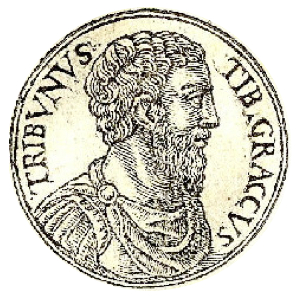
Tiberius GracchusBy every standard of political calculus, the next Presidential election should be a shoe-in for the Republicans.  The economy is anemic, unemployment is still painfully high, millions of people are stuck with homes worth less than their mortgages, the financial markets lurch between euphoria and manic depression, the European financial system is teetering on the brink of collapse, and the President of the United States can’t get even the most innocuous legislation passed by a Congress that seems bound and determined to stonewall everything he proposes.  Surely, this is a prescription for a Democratic disaster next November.  At least it would be—if it weren’t for the fact that the would-be Republican nominees for President have, each and every one, become characters in a badly written, badly acted sitcom.

Michele Bachmann, once the darling of social conservatives, fizzled out faster than a sparkler on the Fourth of July.  Ron Paul, still the darling of the libertarians, is proving himself, once again, to be an amusing circus clown, honest enough in his own, odd way but hopelessly out of touch with reality.  Newt Gingrich, the once mighty Speaker of the House and the bete noir of Bill Clinton, has turned into a sad joke whose personal and financial foibles would bring a blush to the face of anyone less self-assured and less self-absorbed.  And poor Jon Huntsman, one of the few Republican candidates who just might be qualified to be President, can’t even get noticed by voters, despite ringing endorsements by the Republican establishment.

Then, there are ever-so-recent “big three”—Romney, Cain, and Perry.

It was only a month ago that Rick Perry was judged by the punditry to be a slam-dunk, the man who represented the “sweet spot” between Michele Bachmann’s fiery evangelism and Mitt Romney’s cold, calculating competence.  It didn’t take more than a couple of weeks for the sweet spot to turn sour.  After his latest, bizarre Vegas act in New Hampshire, Perry’s milk seems to have curdled once and for all.

It was only a week ago that Herman Cain, with his ah-shucks charm, was riding high.  To be sure, the cable news commentariat never gave him much of a chance, but hey, this is America, and a fair number of ordinary Republicans seemed to like the guy well enough to forgive him an occasional faux pas.  Now, a couple of news cycles later, he is mired in accusations of sexual harassment and illegal campaign funding.  Former pizza czar that he is, he doesn’t seem to realize what all the fuss is about, let alone how to blunt it.  Perhaps he’s too busy trying to sell copies of his book.

And then there’s the semi-official “front-runner,” Mitt Romney, if you can use the phrase “front-runner” to describe a guy whose poll numbers have never cracked 25 percent of the Republican electorate.  We’ve known all along that he was wooden caricature whose idea of the common touch was climbing into a pressed pair of designer jeans.  But dumb?  No, that wasn’t possible.  After all, the guy made millions of dollars on Wall Street and was a pretty successful governor of Massachusetts, a place where you wouldn’t think a Mormon could get elected dog-catcher.  Such a man just couldn’t be dumb.

But dumb is precisely what Romney seems to be.  Who but a dummy would claim against all the evidence that climate change didn’t exist, then change his mind, then change it again?  Who but a dummy would be “pro-choice” when he was governor of Massachusetts, then “absolutely” support a Constitutional Amendment that would ban abortion regardless of circumstance and turn birth control into a crime?  Who but a dummy would champion universal health care for the citizens of the state he used to run, then turn around and deny it to the citizens of the United States?

Mitt Romney may just be the most sadly comical of the motley crew of Republican candidates, because he seems too smart to do such dumb things.  But then, maybe he’s not dumb at all.  Maybe he just doesn’t believe in anything except winning an election.  Maybe he thinks he’s smart enough to fool us and we’re the ones who are too dumb to notice.  If that’s the case, then Mitt Romney has outsmarted himself.  He may be a front-runner now, but come next November, he’ll be running dead last.  The sitcom will be over, and the joke will be on him.

No True Conservatives

Tiberius GracchusThe so-called “debate” between Republican candidates in California some days ago was riddled with rhetoric about the conflict between “liberal” and “conservative” values.  This dichotomy is both false and profoundly misleading, because it obscures what the fight is really about.  The problem we face is not a conflict between liberal and conservative values..  It is the total absence of truly conservative voices from the debate.

True conservatives honor tradition.  They respect and fight to preserve what past generations have accomplished, so that future generations can benefit from those accomplishments.  They are humble in the face of history and suspicious of any person or ideology that tries to remake history in its own image.

True conservatives prefer compromise over confrontation.  They realize that members of a diverse and complicated society forge necessary accommodations with one another over long periods of time.  They believe that such accommodations are both fragile and precious, and deserve to be protected.  Their appetite for radical change is therefore limited and reluctant.

True conservatives are true patriots—not chest-thumping nationalists and demagogues.  They love their country, but they know its limitations.  They realize that love of country does not depend on one set of political opinions, on one religion, on one vision of right and wrong.  True conservatives don’t demonize their fellow citizens for making other  political, spiritual, or even sexual choices.  They recognize that free and democratic societies make room for people; they don’t exclude them.

The Republican Party was once richly endowed with true conservatives and true patriots, men and women like Mark Hatfield of Oregon, Everett Dirksen of Illinois, and Margaret Chase Smith of Maine.  These were people of steadfast principles but also broad and tolerant views.  They were fiscally prudent, to be sure,  and they understood the value of a balancing a budget.  But they also believed that a decent nation has to make some provision for people who are down on their luck, that the privileged and protected owe something to the vulnerable and less fortunate.   These true conservatives were willing to negotiate and find common ground for the greater good   In that spirit, they contributed mightily to the building of our social consensus and would never have participated in its destruction.

One of the greatest conservatives in history, the 18th century British politician, Edmund Burke, once said:  “A true statesman is one who combines the disposition to preserve with the ability to reform.”

This, however, is not the temper of those who today call themselves “conservatives.”  Today’s so-called “conservatives” wish neither to preserve nor to reform.  Instead, they have an unyielding and voracious appetite to destroy.  They want to tear up the past and tear down its legacy.  They clamor to overturn every decent compromise and accommodation our society has made.  They want to reverse or eradicate every shred of the New Deal.  They want to eliminate even the most sensible government regulation.  They want to privatize many of our most precious national resources.

Those who today call themselves “conservative” don’t even know the meaning of the word.  Theirs  is not a “conservative” philosophy.  It is a radical, indeed a revolutionary, program, and it should be labeled as such.

The battle that is ravaging our country today isn’t one between liberal and conservative values.  It is a battle between American values and those who would destroy them.  Until we recognize what this fight is really about, we will never be able to win it.


No Joking Matter

Tiberius GracchusSeveral days ago, a friend asked me a question that at first seemed absurd.  Why, he asked, are there no Obama jokes?  I thought he was kidding—at least until I thought about it a moment or two longer and realized that he was right.  Apart from the occasional shot by the irrepressible likes of David Letterman or Jon Stewart, our current president is conspicuously joke-free.

Most of our past Presidents, on the other hand, have provided us with a gold mine of personal and political humor.  George W. Bush, Bill Clinton, Ronald Reagan, Gerald Ford, even Richard Nixon—every single one of them spawned enough satirical, knee-slapping wise-cracks to fill volumes.  There was Bush’s limitless ability to mangle the English language.  There was Clinton’s fondness for Big Mac’s, not to mention pretty young things in the White House.  There were Reagan’s lapses of memory, Ford’s pratfalls on the podium, and Nixon’s sweaty four o’clock shadow.

But not Barack Obama.  He, almost alone among the Presidents we can still remember, seems to elude humor.  Why?

My friend suggested that “political correctness” may have something to do with it.  It would be unseemly and tasteless to ridicule the first African-American President in our history.  That undoubtedly has something to do with it, but it doesn’t seem to be a sufficient explanation.

Another possibility is that we live in fairly grim times—an economy that’s on its knees, a level of unemployment that won’t budge, a level of public debt that seems likely to beggar our children and our grandchildren.  Perhaps the times are simply too serious to allow for much humor.  But that didn’t stop the jokesters from ridiculing Franklin Delano Roosevelt, his wife Eleanor, and their Scottish terrier Fala during the darkest days of the Great Depression.

No, there must be another reason.   I think the reason may be the man himself.

The people we laugh at are much like us.  No matter how high and mighty they may be, they have feet of clay.  They have all the human imperfections that ordinary people have.  So, when we laugh at them, we also laugh at some part of ourselves.  As Oscar Wilde quipped:  “We are all in the gutter, but some of us are looking at the stars.”   We want our Presidents to be “looking at the stars,” but it comforts and amuses us to learn that they, like the rest of us, are also standing in the gutter.

This is not the case with our current President.  The closest thing we have to an enduring Obama joke is the alliterative phrase, “No Drama Obama.”  But that’s not a joke at all.  It’s a description of the man’s demeanor and temperament.  The President is cool and aloof and above it all.  He abhors “drama,” because drama and its mirror image, comedy, are the stuff of ordinary life.  They are the things that stir ordinary people.

We may admire Barack Obama.  We may sometimes be inspired by him.  But we will never feel close enough, or comfortable enough, to laugh at him.  That may be one reason his presidency, having begun with such high hopes, is foundering on the rocks.


From Rand to Ryan

Tiberius GracchusFor the second time in as many years, Paul Ryan is trying to push a budget through Congress that would slash government and privatize our social safety net, all the while lowering taxes on the richest Americans, who are already paying the lowest taxes in generations.  You have to wonder:  Where does such lunacy come from?  One answer is:  Hollywood.

Paul Ryan has more than once attributed his ideas to the inspiration of a woman named Ayn Rand.  Rand was a novelist, screen writer and publicity hound who fancied herself to be a “philosopher” and, thanks in part to the testimonials of people like Paul Ryan, is the subject of a new documentary that was recently released in a smattering of theaters across the country.  She wrote two best-selling novels, which cloaked her ideas in the window-dressing of pulp fiction, making her both famous and rich.  Her life story would be eminently forgettable if those books hadn’t sold so many copies, and her ideas would be ludicrous if they weren’t taken so seriously by people who should know better.

Rand’s devotees include not only Paul Ryan but Alan Greenspan, whose policies as chairman of the Federal Reserve Bank led to the worst financial collapse since the Great Depression.   Although Greenspan is out of government and Ryan’s second crack at a budget seems just as unlikely to pass as his first, the specter of Ayn Rand still haunts the political landscape—in the “tea party,” in the virulence of right-wing politicians, in the belief that “government is the problem” and the free-market ideology that got us into our current economic mess will somehow get us out.

To defeat an enemy, you need to understand him—or in this case, her.  So, let’s consider what Ayn Rand stood for.

Her “philosophical system” goes by the name “objectivism,” which is a fancy way of saying:  “Use your head instead of your heart.”  She believed that reason and logic are the only ways of understanding the world—that emotion, altruism, sympathy, faith, compassion and other “feelings” are destructive delusions.  She asserted that the only basis of morality is “rational self-interest” (a.k.a. “greed”) and that any attempt to impose “collective” obligations on individuals is inherently coercive and therefore wrong.

All of this would be of merely academic interest had Ayn Rand stuck to the movies.  But she decided to meddle in politics, and she turned her “philosophy” into a grand and pretentious theory of public morality that today cloaks the lunacy of the right with a phony patina of intellectual respectability.

The problem is that Rand’s “philosophy” ignores the realities of human nature and the human experience.  Of course, individuals matter.  Who among us would think, or wish, otherwise?  But no individual is born into the world alone.  No human being can live anything approaching a meaningful or satisfying life apart from the community of others.  And no decent human being can turn a blind eye to the suffering of fellow members of the human race.  Indeed, the irrational “feelings” for which Ayn Rand expressed such contempt—compassion, altruism, self-sacrifice—are among the most important and noble qualities that make us human.  Those whose only priority is “rational self-interest” can scarcely be considered human at all.

Worse yet, Rand divided the world into two opposing camps:  parasitic drones and “productive” individuals, personified by the fictional heroes in her best-selling books.  This caricature of the way the world actually works lies at the heart of the callous ideology of people like Paul Ryan, Eric Cantor, and—yes—Mitt Romney.  What they refuse to acknowledge or fail to comprehend is that, without the rest of humanity, even the most talented individuals would themselves be lost and their work would have no meaning.  Howard Roark, the hero of Rand’s novel The Fountainhead, wasn’t a solitary genius thinking great thoughts in the wilderness.  He was an architect who designed buildings—which are nothing more or less than “collective” spaces to be inhabited, used, and enjoyed by others.  Without a “collective” purpose, there would have been no buildings for Howard Roark to build—no purpose to his work at all.

Let it be said that there is much in Rand’s work that is worthy of praise.  She relentlessly opposed all forms of superstition.  She upheld the right of individuals to think and live differently.  She spoke out against totalitarianism in all its forms.  These are beliefs and actions that deserve respect.  But they do not make up for the corrosive legacy of her “philosophy,” nor do they excuse those who continue to use that “philosophy” to undermine the best things in our human nature.

The supreme irony is that Ayn Rand’s life so completely contradicted her words.  Her fictional heroes despised the approval of the crowd, but she craved it.  They worked alone, but she surrounded herself with a “cult” of adoring and subservient followers.  They had nothing but contempt for the limelight, but she gloried in it.  Perhaps those who claim to follow in her footsteps should pay less attention to what she said and more attention to the way she lived. It is Ayn’s Rand’s life that gives the lie to her creed.

Crazy Like a Fox

Tiberius GracchusFirst, there was all that talk of seceding from the union.  Then came a fervent assertion that “moral relativism” is the cause of all the country’s problems.  Next came the insinuation that the chairman of the Federal Reserve was somehow guilty of treason.  And now, there are assertions that global warming  doesn’t exist and raising the country’s debt limit isn’t necessary.  All this in a breathtakingly short period of time from the new unofficial front-runner for the Republican nomination, Governor Rick Perry of Texas.

There are only three possible explanations for this sort of nonsense.  Rick Perry is stupid.  Rick Perry is corrupt.  Or Rick Perry is crazy.  If there’s a third option, it’s hard to imagine what it might be.

Let’s start with “stupid.”  There is plenty to be said for this possibility, since Rick Perry seems to have remarkably little knowledge of things that are, to say the least, rather important for a public leader to know.  The Constitution, for instance.

Perry recently labeled the printing of money by the Federal Reserve Bank as “treasonous where I come from,” and he personalized the accusation by leveling it directly at the Bank’s chairman.  The last time I looked, the Constitution said nothing to equate “printing money” (which happens to be one of the jobs of a central bank) with “treason”. Perry’s talk of secession is another matter.  Since the United States of America aren’t about to dissolve themselves willingly or peacefully, secession could only be brought about by an act of war against the nation.  That, of course, is precisely how Article III of the Constitution defines “treason.”  And that is why we fought the Civil War.  For a sitting governor of the state of Texas to talk about seceding from the union 150 years later is “treasonous where I come from.”  It also qualifies as profoundly stupid.

Now let’s consider the possibility that Rick Perry is corrupt.  Of course, there are two kinds of corruption—illegal and immoral—and it’s often hard to disentangle the two.  Illegal corruption involves an overt bargain:  you pay me and I’ll pay you back with a favor.  That sometimes passes in ordinary life.  But in public life, it’s a crime.  Immoral corruption involves a more subtle bargain:  you support me because I favor policies that benefit you.  There is no way of knowing (yet) whether Perry is guilty of the first brand of corruption, but he is certainly guilty of the second.

To mention merely one example:  In the last eight years, the infamous Koch brothers, whose money comes from oil and gas, have contributed two million dollars to political campaigns and candidates.  That’s the “official” number, of course.  It’s impossible to know how many much they’ve passed under the table.  In any case, nearly all of this money has gone to Republicans, and nearly half of it has been spent in Texas.  The largest portion of their spending in Texas has—wonder of wonders—benefitted Rick Perry.   And how have the Koch brothers been repaid?  With Perry’s assertion that global warming is a fraud perpetuated by scientists who have “manipulated the data.”  If voters buy this fiction, the Koch brothers will get even richer than they already are.

Then, there is the very real possibility that Rick Perry is simply crazy.  Certainly, his claims that we are “adrift in a sea of moral relativism” and that prayer is the only way we can get back to solid ground have all the earmarks of lunacy.  Don’t get me wrong.  I’m not mocking prayer or those who choose to pray or even those who choose to think that their god is the only god.  That’s their business.  But this is a democracy with a vast and diverse population whose beliefs don’t fit into any one spiritual niche.  It is also a democracy with a Constitution that specifically separates church and state.  To think that such a democracy can be governed from the pulpit is just plain nuts.

Finally, there is the possibility that Rick Perry is a different kind of crazy—crazy like a fox.  Maybe he knows that his ignorance doesn’t matter, because so many of his fellow citizens are even more ignorant than he is.  Maybe he knows that corruption doesn’t matter in a country where money and the markets are the governing morality.   Maybe he knows that fundamentalist Christians are ready to put their faith in hopeful prayer rather than practical policies.  Maybe, like a sly fox, Rick Perry has reason to think that he can get away with anything.

If Rick Perry is this kind of crazy, then we would be crazy to elect him.


A Christian Nation

Tiberius GracchusThe sight of the Governor of Texas pontificating from a pulpit would be ridiculous if it weren’t so revolting.  It is claimed by Rick Perry and his ilk that Christianity and Christian values have been shoved off the stage of our public life by godless liberals in government and academia, that “moral relativism” is the cause of all our troubles, that we have become a secular and immoral society estranged from the faith of our forefathers, and that only when we become a “Christian Nation” again, can we hope for salvation.

This paranoid rant has been with us for a long time, it has deep roots, and it shows no sign of letting up.  To one degree or another, it is responsible for the intolerant, unyielding, and vicious nature of our public debate about the most basic human rights and needs:  the worth of public education, the freedom of women to make their own decisions, the utterly natural desire of gay Americans to be treated like the citizens they actually are.  When one side believes that thinking differently  is “wrong,” that being different is “evil,” no civilized debate is possible.  There is only war.  And a war is what we have.

We are at war, not because Christianity has been banished from the public square but, rather, because it has been allowed to occupy altogether too much space in that square.  It isn’t the rest of us who refuse to make room for Christianity; it is those on the Christian right—fundamentalist, intolerant, backward-looking—who refuse to make room for us.

Where in the Declaration of Independence or the Constitution of the United States does the word “Christian” appear?   Where does the Bill of Rights state that only Christians are entitled to the rights of citizens?  Where did the Founding Fathers avow that they conceived the United States of America to be “a Christian nation”?  The answer to all these questions is:  Nowhere.

How, then, does the Christian right dare to equate being an American with being a Christian—let alone their own narrow, distorted version of what being a Christian means?  How dare they impose their theology on others!  And how dare they talk about “moral relativism” when the only morality they recognize is their own!   Our problem isn’t “moral relativism;” it is the “moral absolutism” of those who have absolutely no understanding of what it means to be citizens of a free and democratic nation.

It is because we are a free and democratic nation that none of us has the right to impose his or her private beliefs on anyone else.  It is because we are a free and democratic nation that Christians—and Muslims, and Jews, and all Americans—have the freedom to worship as they wish and believe what they choose—even if they choose to believe in nothing at all.

Let us be clear:  freedom and democracy are the values of a secular, not a Christian, nation.  In such a nation, there is room in the public square for everyone and anyone—except for those who deny and would destroy the values that truly make us what we are.   Christians on the right, most of all, should get down on their knees and thank their God for being able to live in such a place.  They have done precious little to deserve it, but perhaps their God will be merciful enough to forgive them.


You Get What You Pay For

Tiberius GracchusIt is an article of faith on the right that our government spends too much and taxes too much.  To quote tea party zealots in Congress:  “We don’t have a revenue problem, we have a spending problem.”  No matter who gets the Republican nomination, we’re going to hear this refrain again and again and again.  Indeed, Americans have already heard it so often that most people have come to accept it as true without thought or examination.  The trouble is, it’s not true.

We are told that “runaway spending” by government is wrecking our economy.   But government spending in the United States, as a percentage of our total economy, is far behind the rest of the industrialized world.  How do we account for the fact that other societies, with far higher levels of government spending, are in better economic shape?

We are told that taxes are too high and that high taxes “kill jobs.”  But taxation in the United States is far lower than in most other advanced countries.  How do we account for the fact that more highly taxed societies offer their citizens higher standards of living and better public services?  And how do we explain the reality that our economy was in much better shape in prior eras when our taxes were, in fact, much higher than they are today?

We are told that higher taxes on the top one percent would crush the “small businesses” that provide most of the jobs in our society.  But the vast majority of small business owners aren’t even close to being in the top one percent of income earners, and no one has proposed raising their taxes.   How, in any event, do we deal with the fact that many of the jobs provided by small businesses are insecure, ill-paying, and temporary?

It’s time to recognize that we are being lied to—systematically and deliberately—by those whose self-interest is at stake.   We are being lied to by Republicans whose sole interest is the downfall of Barack Obama and the eradication of the New Deal.  We are being lied by corporations whose sole motivation is to continue shipping jobs overseas all the while they continue to pay no taxes at home.  We are being lied to by right-wing demagogues in Congress whose sole purpose is to win the next election and every election thereafter.

It’s time to stop listening to the lies and face up to the truth.  The truth is that we spend too much on the wrong things and too little on the right things, and that we don’t tax enough to pay for either.  If we want our kids to become thinking citizens rather than mindless consumers, then we have to invest in education.  If we want roads and bridges that don’t fall apart, then we have to invest in infrastructure.  If we want a decent health care system, then we have to stop subsidizing private insurance companies and start investing in a more efficient public alternative.  It’s time to stop kidding ourselves.  You get what you pay for and not a penny more.


The Great Con Man

Tiberius GracchusIt may seem odd to talk of Ronald Reagan more than twenty years after he left office, at a time when our country confronts one of the most serious economic and social crises of modern times.  But there’s a good reason.  The reason is that Ronald Reagan—or rather, the myth of Ronald Reagan—is in no small measure responsible for the problems we face.   If we needed a reminder of this sad reality, we got one earlier this week in Iowa, when ten hopeful Republican nominees—some with obvious and embarrassing reluctance—raised their hands to pledge their opposition to even a penny of additional taxation on the richest Americans.

Ronald Reagan is often called “the great communicator,” and there is no denying that he had charm.  With a wink and the mischievous grin of a leprechaun, he disarmed his enemies and deflected their barbs.  We loved him for it; we still do.  But behind every wink, there was also deceit, for Ronald Reagan conned millions of Americans into believing fairy tales.  His charm was so great that we are still living under the spell of the fairy tales he told us and the fictions he sold us.

Ronald Reagan sold us the fiction of the market, of “trickle-down” economics, of the infamous “Lafler curve.”  According to this fairy tale, if we make the rich even richer than they already are, everyone will benefit.  Never mind that this tale bears no resemblance to reality.  Never mind the terrible realities of the Great Depression of 1929.  Never mind the historical truth that greed, when left to go its own way, inevitably produces collapse, leaving immeasurable human sorrow in its wake.  After the financial catastrophe of 2008, you would think that we might have learned enough to put this fairy tale behind us.  But Ronald Reagan’s lingering charm is so pervasive that we find ourselves living out the same old plot, dutifully playing our parts in a story-line written by corporate America.

Ronald Reagan sold us the fiction that business is good, unions are bad.  According to this fairy tale, unions  violate “the right to work” and the “right” of businesses to operate as they choose—which means, of course, paying substandard wages or shipping jobs overseas where workers have no rights.   It was Ronald Reagan who kicked out thousands of air traffic controllers when they struck for better wages and safer working conditions.  Never mind that they had tried for months to negotiate in good faith, that their complaints were real and completely justified.  Believing the fairy tale,  most Americans cheered “the Gipper,” not the air traffic controllers who lost their jobs.  And most Americans today, still believing the fairy tale, would rather be caught dead than be caught walking a picket line.

Worst of all, Ronald Reagan sold us the fiction that “government is the problem, not the solution.”  According to this fairy tale, only private enterprise can do things well, while government produces only inefficiency and waste.  Never mind that Medicare “wastes” less money than any private insurance company.  Never mind that most of the drugs that actually make us healthy and safe come from government-funded research by public institutions and universities.  Never mind that, without government, most Americans would be drinking tainted water, breathing poisoned air, and driving cars that get five miles to the gallon.  Never mind that government, not private enterprise, gave us the Interstate Highway System, the National Parks, and—whatever the limitations of our public schools—the only opportunity in our history for every citizen to get an education without regard to race, background, or wealth.

Let us not forget who Ronald Reagan really was.  Behind the winning smile and the elf-like optimism, there lurked another, altogether less charming Ronald Reagan.  The Reagan who, all the while he was president of the Screen Actor’s Guild, blithely betrayed to the FBI the names of fellow actors he judged to be “Communists.”  The Reagan who asserted that homeowners and renters had a right to discriminate against Negroes.  The Reagan who took money from the American Medical Association to say that Medicare would end freedom in America.  The Reagan who made a handsome living peddling the political agenda of GE.  Ronald Reagan may actually have believed in what he was doing when he did all these things.  But if that is true, he didn’t just con us—he conned himself.

When those ten Republican candidates raised their hands in Iowa, they were acting out one of Ronald Reagan’s many fairy tales.  Until we put aside his fictions—until we put the spell of Ronald Reagan behind us—we will never be able to reverse the disastrous legacy of the greatest con man in our history.


A Bitter Truth, a Bitter Choice

Tiberius GracchusSome Democrats are finally saying openly what many more are thinking down deep:  the President of the United States should step aside and make room for another, more effectual candidate to lead the country in a better direction.  Like it or not, it is time for all progressive Americans to face up to a bitter truth.  Barack Obama is a failure.

We’ve spent three years explaining and excusing the President’s lack of decisive action:  The financial collapse was not of his making.  The ensuing recession-depression was not his fault.  The intransigence of the tea party has been and continues to be an obstacle to constructive legislation, an obstacle that he is not responsible for.  All these things are true.  But they are the cards he was dealt, and he has played them miserably.

Instead of leading, he has chosen to stand aloof.  Instead of compromising, he has capitulated.  Instead of setting an active agenda which the country can follow, he has conceded to the Republicans the agenda they wish to impose upon us.

It would be foolish to attempt to psychoanalyze Barack Obama and, in the final analysis, a complete waste of time.  It doesn’t really matter what aspects of his personality and character have caused the failure.  The only thing that matters is that he has failed, and it is too late to turn back the clock.  This is regrettable.  But regret will not change reality.

For progressives to waste another four years trying to persuade the President to do the right thing would be a great tragedy for the nation.  Too much is at stake.  And there is no evidence that he can be persuaded.  Indeed, there is no evidence that he even knows what the “right thing” is.  Beyond the expedience of the moment and a desire to be reelected, it is hard to fathom what he actually stands for.

He is not even the great communicator that he is so often made out to be.  What has all the lofty rhetoric brought us?  What have the soothing, oh-so-reasonable words accomplished?  The sad answer is:  next to nothing.

This is not the kind of President we need in the midst of an unprecedented economic, social, and moral crisis.  We need a President who can rouse the nation.  We need a President who is prepared to fight for what he believes in.  We need a President who does, in fact, believe in something.

Barack Obama is a manifestly smart and decent man, with the best of intentions.  But the road to hell is paved with good intentions, and we are well on our way down that road.  Somebody has to stand up and say “stop.”  Before it’s too late.

If the President had a level of courage that matched his intelligence, he would heed the call to step aside.  Since that, to say the least, is extremely unlikely, the next national election will confront us all with a bitter choice.  Do we vote for the lesser of two evils or withhold our votes altogether?

Every citizen must obviously answer this question for himself.  And there are those who, quite reasonably, argue that we have no choice, that we must vote for Barack Obama, because the alternatives are so dreadful.  I, for one, am not so sure.

If the President is reelected, what are we likely to get?  Four more years of indecision and capitulation.  Four more years for the right wing to impose its agenda on a fractured Democratic Party and a feckless Democratic President.  Four more years of drift.

Maybe we need a defeat, a complete and decisive defeat, to galvanize the nation into action.  Maybe it’s time for the Democratic Party to become a true opposition party.  Maybe then the Democratic Party will learn how to fight again.