gracchusdixit

Two Thousand Years Ago, the Brothers Tiberius and Gaius Gracchus Sacrificed a Life of Privilege to Defend the Interests of the Roman People. They Were Murdered for Their Efforts.

Here They Go Again

Whenever Republicans or conservatives more generally run out of credible governing ideas (which is most of the time), they resort to the oldest rhetorical trick in the world: hooting and hollering about some ideological bogeyman that has no basis in reality but sparks just enough visceral outrage to persuade a gullible electorate that the “American way of life” is in peril.  Like the Weird Sisters in Shakespeare’s Macbeth, demagogues on the right have been conjuring up harbingers of imminent doom for years.  When they can’t find any other culprit to blame for their apocalyptic lamentations, the “double, double, toil and trouble” they invariably fall back upon is the wicked specter of “socialism”.  

Once upon a time, it was the threat of “communism” that hovered over the land.  Sadly for conservatives, the fall of the Berlin Wall abruptly kicked the legs out from under that straw man, and thus far, neither Vladimir Putin’s Russia nor the nominally “communist” regime that runs China has been able to fill its shoes.  While Putin is beyond doubt a gangster capable of enormous mischief, the much-diminished nation over which he presides no longer qualifies as an existential threat to the United States.  And to make matters worse, China is “communist” in name only.  In practice, the sole agenda of its governing party appears to be self-preservation, and, to the profound embarrassment of capitalists in the west, China’s “communists” have brilliantly coopted the tactics of capitalism all the while rejecting its ideological premises.  Thus, conservatives have had to settle once again for their default bogeyman—”socialism”.

During a recent and rare visit to his home state of Kentucky, Mitch McConnell, the Republican minority leader in the United States Senate, was asked about the internal food fight roiling his party.  Master of evasion that he is, Mitch the Mensch sidestepped the question, proclaiming, instead, that he was “100 percent focused” on stopping the “socialist” agenda of the Biden administration.

A few days later, Mo Brooks, a certifiably crazy Republican Congressman from Alabama, seized upon disappointing April employment figures to bellow on Twitter:  “The government pays people BIG bucks not to work so they don’t!  DUH!  Socialism seems nice but in fact is destructive.  America:  learn or lose!”.

Far more consequential than the addled mutterings of people like McConnell and Brooks are the Olympian pronouncements of the conservative economic and political thinker Thomas Sowell, who joined Brooks on Twitter several days ago to serve up this indictment:  

The whole political vision of the left, including socialism and communism, has failed by virtually every empirical test, in countries all around the world.  But this has only led leftist intellectuals to evade and denigrate empirical evidence.

Sowell is not only a prominent conservative, he is African-American and a product of Harvard.  As such, he is off-limits to most critics on the left, who tread lightly, no matter how much they may deplore his views.  The irony in this is that the PC culture conservatives like Sowell denounce so routinely allows him to get away with outrageous falsehoods.  Chief among which is the claim that those on the left distort “empirical evidence,” whereas it is conservatives like Sowell who twist the truth and trade in falsehoods to advance their ideological agenda.  

Thomas Sowell knows perfectly well that the totalitarian regimes of Joseph Stalin and Chairman Mao were not the sort of societies that Karl Marx would ever have recognized as “communism”.  He also knows, or should know, that socialism has never been fully adopted by any government, anywhere.  All we have ever gotten are bits and pieces of “socialism,” from Britain’s Labour government after the Second World War and from the egalitarian democracies of Scandinavia, the Netherlands, and Germany.  Far from failing “by virtually every empirical test,” nearly all these limited forays into socialism have proved to be resoundingly successful.  

Even more to the point, Sowell must surely know that a socialist government is now running Portugal.  Not only does it have the overwhelming support of the Portuguese people, but it is producing embarrassingly effective economic results.   Last year, Portugal’s GDP grew more than the GDP of every European country and far more than that of the United States, which actually declined.  If conservatives want us to believe that socialism has failed by “virtually every empirical test,” they had better come up with a better test. 

Why, then, are they so fixated on “socialism” as their bogeyman and so convinced that this shopworn trope will continue to yield political results?   There are least three answers.

The first is that a large swath of the American electorate is ignorant, gullible, or both.    Otherwise, Donald Trump would never have been elected in the first place.  Indeed, few Trump voters, if pressed, could tell you the difference between a socialist and a socialite. 

The second reason is that Americans have been so brainwashed by the fairy tales of capitalism that they are incapable of seeing it for the colossal historical failure that it actually is.  When financial markets suddenly lose their value, conservative pundits call it a “correction”.  When the economy suddenly grinds to a halt, they chalk it up to “the business cycle”.  When the system collapses entirely—as it did in 1837, 1873, 1929, and very nearly in 2008—they call it “creative destruction,” though the only thing this destruction creates is misery for millions of ordinary human beings. 

These callous and cynical euphemisms are designed to cloak the fact that the premises of capitalism are false and its promises empty.  The so-called “free market” does not work “efficiently,” as the textbooks claim.  Unfettered  “competition” does not yield better products and lower prices. The theory of the “invisible hand”—that aggregated self-interest will mysteriously lead to beneficial results for society as a whole—is and always has been an anthropological fairy tale, having no more connection with reality than one of Aesop’s fables.  In the final analysis, capitalism is less an economic and social system than a spectacularly successful con. 

The final reason that socialism is such an easy target for Republicans is socialism itself.  Unlike the ideological antipodes of capitalism and communism, each of which, like a revealed religion, has a prophet and a foundational text, socialism is harder to pin down.  It is not an ideological or theological creed; it has no orthodox dogma; it does not pit true-believers against “heretics”.  For every socialist who argues that the means of production should be owned by those who do the producing, you can find one who believes otherwise.  Some socialists think that essential public services should be run by the government; others are entirely open to private enterprise, as long as it serves the public good.  

Socialism is less an ideology than a coherent set of moral principles:  that every human being has irreducible value, that the economy of a society should be organized to serve the general good rather than private profit, that the “rule of law” should honor human rights over property rights, that democracy is the only legitimate form of government.  Few would disagree with these principles, and that is the ultimate reason Republicans attack socialism so fiercely.  They attack socialism,  because they fear its moral power.
The Counter Culture Con

During Donald Trump’s second impeachment trial, it quickly became clear that his lazy-minded lawyers realized that the “fix was in”.  Lazy or not, they were not altogether stupid, so they didn’t bother to mount a serious defense. Instead, they moaned and groaned that the charges against their boss were a form of “constitutional cancel culture”.  

This cynical whining would have been as comical as the rest of their clown act, were it not for the fact that “cancel culture” has become the latest ideological rallying cry for perpetually angry and aggrieved conservatives who, lacking any substantive justifications for their grievances, always need existential enemies to blame.  In the 1950s, it was “communists” in the State Department; in the 1960s, it was drugged-up “hippies” protesting in the streets; in the 1980s, it was “welfare queens” and “big government”.  Now, it’s the evils of “cancel culture”.  One might even say that it was right-wing whinging about “cancel culture” that got Donald Trump elected in the first place, since he spent a good deal of his campaign in 2015 railing against the Procrustean shackles of “political correctness,” which is merely “cancel culture” by another name.  

The narrative fueling such nonsense goes like this:  

The citadels of American culture—the media, the academy, the financial and social establishment—have been hijacked by “woke” left-wingers who use their lofty perch to intimidate, censor, and silence “authentic” Americans, which is to say, the conservative Christians who inhabit the “heartland,” as opposed to the godless cosmopolitans who populate the “coasts”.  

Why a Bible-thumping hog farmer from Iowa is more authentically American than a software engineer from California is never explained.  On the contrary, anyone who dares even to broach the question is dismissed, ipso facto, as a member of the cancel culture cabal.  Opposing this cabal, the saga continues, is a phalanx of conservative heroes who, like Leonidas and his brave but doomed band of Spartans, stand in the breech and risk their all to speak politically incorrect truths. 

This truth-telling includes but is not limited to:  America is a white, Christian country, and those who thinks otherwise should pack their bags and catch the first plane back to wherever their dusky ancestors came from; the Black Lives Matter movement is a communist plot and a cover for ANTIFA, which is itself a communist plot; the Me Too movement is an hysterical hoax cooked up by man-hating, baby-killing feminists; every sexual choice embodied in the acronym LGBTQ is either sick or sinful, and if not stamped out soon, will mean the end of Western Civilization.

If such fantastic falsehoods, as well as the fairytale of persecution and martyrdom that is invoked to justify them, were limited to the libertarian loons who inhabit the murky recesses of modern-day conservatism, the situation would be bad enough.  Unfortunately, more than a few supposedly enlightened liberals have been caught up in the same sticky rhetorical web.  

Some months ago, for example, a list of prominent “public intellectuals” published an open letter in Harper’s magazine, in which they castigated “cancel culture” without using that name.  A few were fixtures of the conservative firmament.  Most, however, were luminaries of the left.  Their cri de coeur was rather pretentiously entitled “A Letter on Justice and Open Debate,” and it went like this:

The free exchange of information and ideas, the lifeblood of a liberal society, is daily becoming more constricted. While we have come to expect this on the radical right, censoriousness is also spreading more widely in our culture… it is now all too common to hear calls for swift and severe retribution in response to perceived transgressions of speech and thought…We are already paying the price in greater risk aversion among writers, artists, and journalists who fear for their livelihoods if they depart from the consensus…We need to preserve the possibility of good-faith disagreement without dire professional consequences.

There are several problems with this argument, if one can even call it that.  

First of all, it conflates the repressive “censoriousness” of authoritarian conservatives with liberal calls for a more truthful representation of both history and social reality.  Conservatives would happily shut down speech and thought that doesn’t toe the ideological line, and would no less happily do so at the point of a gun.  Liberals prefer to challenge and, yes, sometimes shun ideas which have outlived their usefulness or fail to reflect the world as it actually is.  The two impulses are not even remotely the same.

What’s more, this letter condemns “calls for swift and severe retribution” against “perceived transgressions of speech and thought,” but never bothers to specify those transgressions, leaving the reader to conclude that they are innocent missteps or harmless prevarications rather than outright lies.  This is a sophist’s trick.

One of the unspecified transgressions, which has sparked controversy on university campuses across the country, is the continuing pretense that the “founding fathers” of the United States were men of unsullied virtue, like noble Romans of old, rather than the self-interested capitalists and slave-owners they actually were.  Perhaps little George Washington “couldn’t tell a lie” when he admitted to cutting down his father’s cherry tree, but it is beyond dispute that Washington the fully grown man acquired his fortune by speculating in land stolen from Native Americans.  Thomas Jefferson may have believed, at least on paper, that “all men are created equal,” but that didn’t stop him from beating his slaves or bedding Sally Hemings.  When students turn their backs on teachers who insist on peddling fairy tales instead of facts, that isn’t “cancel culture”.  It’s a call for truth telling.

The liberal luminaries who signed their names to the Harper’s letter would have us believe that they are defending freedom of speech and the “free exchange of information and ideas”.  And perhaps, in their own minds, that is what they imagine they are doing.  But that does not make it so.

When they rail that writers, artists, and journalists “fear for their livelihoods” or face “dire professional consequences” because of what they say or write, one can only ask:  have they forgotten the lessons of the last two thousand years?  Next to the fates endured by Socrates, Galileo, or Giordano Bruno, losing a job at Yale or the New York Times is a trifle. 

No freedom comes without commensurate consequences, responsibilities, and risks.  The Constitution of the United States guarantees the right to speak.  It does not (nor could it ever) guarantee that anyone will listen.  And it certainly doesn’t guarantee a livelihood.  Just as you and I have the right to say whatever we wish, others have the right to ignore, rebuke, shame, or shun us.  That is not censorship; it is not “cancel culture;” it is the price we must sometimes pay when we exercise the right to speak unpleasant truths.

The unpleasant truth in this case is that the crusade against “cancel culture” is a con, and those who have joined it are either conning themselves or conning us. 

The Medium Is the Menace

Now that Donald Trump has slunk away to nurse his paranoid grievances in that bastion of bad taste called Mar-a-Lago, not to mention having been impeached for an unprecedented second time, many Americans are asking themselves:  How did we ever allow such a self-absorbed and criminally incompetent sociopath to become President of the United States?

Looking for answers, some harken back the “Southern Strategy” of Richard Nixon, which turned the Republican Party into a political arm of the Ku Klux Klan.  Others hold Ronald Reagan responsible, for using his slick charm to trick so many Americans into thinking that government is an existential evil.   Still others point the finger at one-time Speaker of the House of Representatives Newt Gingrich, who shut down the federal government (twice, no less) rather than spend a single penny on those he deemed to be shiftless wards of the welfare state.  Each of these answers contains a germ of truth.  

The greater truth, however, is that the societal insanity which saddled us with Donald Trump started long before the Republican Party began lurching toward its present lunacy.   Indeed, it can be said to have begun on October 22, 1454.  

It was then, more than five centuries ago, that the pages of the first known copy of the now-famous “Gutenberg Bible” were peeled off the gooey, ink-slathered surface of a new invention, the printing press, in Mainz, Germany.  Before that momentous event, books had been produced entirely by hand, making them rare and incomprehensibly costly.  For millennia, the knowledge they contained had been the exclusive province of monks and monarchs, patriarchs and princes.  The invention of the printing press changed all that.  

Almost immediately, the new medium was heralded as a beacon of hope, offering up the possibility that knowledge might henceforth be shared more democratically.  Much of this hope was realized.  When the great Bible rolled off Gutenberg’s press in Mainz, only seven percent of Europeans could read anything, let alone the Latin text of his masterwork.  A century later, literacy had more than doubled; it has been climbing ever since.

It didn’t take long, however, for this revolutionary new medium to produce consequences that were anything but hopeful.  That millions could suddenly hold a copy of the Bible in their own hands and read it for themselves, was, on one level, liberating; on another, it proved to be catastrophic.  The work of towering intellects like Augustine and Ambrose, Ockham and Aquinas, was cast aside by half-literate non-entities who claimed to have a personal relationship with the Almighty, simply because they could read “the word of God” on a printed page.  In one of the great ironies of history, the medium that did more than any other to expand human knowledge also spawned a poisonous brew of ignorance, arrogance, and intolerance.

This lethal combination planted the seeds of the Protestant Reformation and the Catholic Counter-Reformation, inflicting centuries of misery on those deemed “heretics” by each side.  It led to the Thirty Years War, which turned Central Europe into an abattoir.  It sparked the English Civil War, which pitted fanatical Puritans against their country’s anointed king and established church.  And eventually, it fueled the terrors and tumult of the American and French Revolutions.

During much of this time, Europe and North America were neck-deep in what today would be called “fake news”.  Malicious pamphleteers churned out a slurry of scandal sheets, peddling every false and scurrilous rumor they could find or fabricate.  In the coffee houses of London, the cafés of Paris, and the malodorous taverns of the American colonies, credulous “readers” were deluged by conspiracy theories of all kinds.  That Charles I lost his head on the block, that Louis XVI and Marie Antoinette lost theirs on the guillotine, that Britain’s American colonies decided (absurdly, given the triviality of their complaints) that it was necessary “for one people to dissolve the political bonds that connected them with another,” were owed in no small part to the printing press.

Scandal-mongering and conspiracy theories were nothing new, of course.  The ancient Egyptians, Greeks, and Romans all reveled in them.  What made the difference this time was that they appeared in a medium that had once been reserved for the privileged and the powerful.  This gave even the most outrageous rumors, slanders, and innuendoes an air of authority they did not deserve.  The medium itself, more than its message, was the principal cause of the trouble. 

It wasn’t until 1964 that this phenomenon was analyzed in depth, by a Canadian scholar named Marshall McLuhan.  McLuhan proposed a theory of communication summed up in the now-famous phrase, “the medium is the message”.  By this, he meant that the structure of a communications medium—the way it works and acts upon the mind—is far more important than the content it conveys.  Perhaps the best-known example he used to illustrate his point was that of the common light bulb.  This ubiquitous medium transmits no information at all; it merely transmits raw energy in the form of light.  Yet its very existence changes behavior dramatically.  Although McLuhan died before the first personal computer or the internet saw the light of day, he would not have been surprised by what followed.  In particular, he would not have been surprised by the transformative, and corrosive, effects of social media.

It is no exaggeration to say that Donald Trump might never have been elected except for the influence of Twitter and Facebook, Instagram and YouTube.  Thus, many members of the political and journalistic nomenklatura are calling for editorial restrictions to be imposed on these social media behemoths.  These calls, though well-intended, miss the point, because they misperceive the problem. The problem is not the “fake news” peddled on social media platforms.   The problem is the medium itself.  

Social media platforms are designed, not to communicate verifiable facts—let alone truth—but to magnify and manipulate the self-regard of those who use them.  The entire algorithmic architecture of “likes,” “friends,” “retweets,” and “hashtags” is Pavlovian in the worst possible way.  It insulates social media users from rational disagreement or constructive criticism.   It creates a psychological distortion field akin to the mirrors in a fun-house, in which a person sees his own image reflected and repeated endlessly.   Social media users may  think they are engaged in meaningful conversations; in reality, they are talking to themselves, and the “selves” they are talking to have been managed and manufactured.

The original prospect touted by the secretive billionaires who control this revolutionary new medium was the creation of a global community that would bring humankind together by shattering the boundaries that separate us.   The truth is that social media divide and isolate us, by creating separately tailored universes, grounded in largely artificial realities.   This process, carried to its logical and monstrous extreme, has the power to gin up the virtual equivalent of a murderous mob.  On January 6th, 2021, we saw the virtual become real, as a deluded gang of Trump supporters descended upon the Capitol of the United States and came very close to ending our democracy.

This was not the unintended or unforeseen consequence of an otherwise beneficent medium.  The sleep-inducing platitudes muttered by social media moguls like Mark Zuckerberg are not harmless bromides, merely intended to tout their services and boost their stock prices.  They are outright lies, which have the most serious social and political consequences.  Johannes Gutenberg’s printing press may have produced unintended consequences, but it gave us one of the most magnificent books in history as well as centuries of learning and knowledge.   Facebook, Twitter, and the rest have given us little more than illusions and menace.   They deserve more than regulation.  If they will not mend their ways, they deserve extermination.

We Have Met the Enemy, and He Is Us

The 18th century diplomat and political philosopher, Joseph de Maistre, famously quipped:  “Every nation gets the government it deserves.”  He was thinking of the French and the Revolution of 1789, which he abominated, because he deemed the notion that “the people” were fit to govern themselves to be idiotic. De Maistre’s mordant bon mot was quickly plagiarized by no less than Thomas Jefferson and Alexis de Tocqueville, even though they were far more sympathetic to the popular aspirations he disdained—proof positive that a juicy turn of phrase is too good to pass up, even for those who may disagree with it.    

After four years of a watching a sociopath squat in the White House, after suffering the criminal dysfunction of his incompetent administration, after enduring a lethally bungled response to a global pandemic, after witnessing Donald Trump’s dangerously dumb followers bellow and bash their way into the halls of Congress, it is difficult to disagree with Monsieur de Maistre.  That Donald Trump lost the 2020 election by seven million votes and two Democrats now represent Georgia in the Senate are signs of hope.  But they don’t alter the depressing realities that 74 million people voted for an outright criminal and many of them cling to the absurd fairy tale that he actually won by a landslide.

Which raises a fundamental question:  What accounts for the willingness—one might even say, the eagerness—of such a large swath of the American people to choose a tin-pot dictator over democracy, to abandon common sense and common decency for corruption and a con, to embrace bad government over good?  There are several answers to this question, and unfortunately, none of them is pleasant.

The least unpleasant answer may be that ours is still a comparatively young nation, which makes us, so to speak, historical adolescents, who cannot be expected to make mature decisions.  It is not that older nations, with longer histories, are more virtuous.  It is merely that experience tends to give them a perspective that we lack.  The Italians are notoriously cynical, the French unruly, the Swiss democratic, and the Scandinavians egalitarian, because they have, one and all, lived through centuries of chaos and misrule.  Without that context, Americans have no such clarity.  We are akin to children, to whom every new experience provides more titillation than threat.  Thus, instead of changing our ways, we throw tantrums when we do not get our way.

Another, less pleasant, answer is that Americans are appallingly ignorant.  Few, including the current president, can name the three branches of government; many are incapable of naming any branch of government.  Even fewer can parse a sentence, let alone tell the difference between a noun and a pronoun, or a verb and an adverb.  On the most basic measures of literacy and mathematics, Americans lag far behind the rest of the so-called “advanced” nations of the world. 

This is not because Americans are intrinsically stupid—though some clearly are.  It is because we have allowed political and religious ideology to supplant learning and knowledge.  There was a brief moment when the nation as a whole got smarter, because our country made a major investment in universal public education.  That forward march came to a screeching halt with the election of Ronald Reagan, whose demonizing of government empowered the Republican Party to starve the public sphere in the name of “private enterprise” and “personal freedom”.  This assault on the public good, and on public education in particular, has made Americans more ignorant and intellectually impoverished than they have been in generations.   

An even less pleasant answer is that our most abiding national myth, that the United States of America is a “land opportunity” for those “yearning to be free,” is awash in a  bucketload of eyewash.  For every immigrant who came to these shores seeking freedom, asylum, or opportunity, there was another who came for less meritorious reasons.   From the beginning, this country has been a social and political dumping ground, in which other nations have deposited their miscreants and malcontents.  

The Puritans were religious bigots, unwelcome in their own land, as happy hanging witches as they were hoisting the flag of freedom.  The “Sons of Liberty,” who cooked up the Boston Tea Party, were a mob of lawless tax-evaders.  Another mob of tax-evaders instigated our so-called “War of Independence,” causing 100,000 loyal and law-abiding Americans to flee the country and 20,000 African-American slaves to ditch their masters and fight for the British.  Last week’s invasion of the Capitol building by a gang of white-trash thugs was merely the latest episode in a long tradition.

The last, and least pleasant, answer to the question of what motivates such people is that selfishness, racism, and violence are deeply embedded in American history and essential components of the American character.  

American selfishness loves to masquerade as a “love of liberty,” a charade that has been on shameless display during the pandemic.  All the while thousands were gasping for breath and wheezing to death in ICUs across the land, Samuel Alito, one of the most partisan and sanctimonious members of the Supreme Court, declared: “The pandemic has resulted in previously unimaginable restrictions on individual liberty.”  He was joined by another master of sanctimony, our former Attorney General, William Barr, who said:  “Other than slavery…this is the greatest intrusion on civil liberties in American history.”  

These claims are absurd.  Asking Americans to wear masks or refrain from crowded gatherings is not remotely akin to slavery.  When compared with the suspension of habeas corpus during the Civil War, the rounding up of guiltless thousands under the Alien and Sedition Acts, the incarceration of 120,000 innocent Japanese-Americans during the Second World War, or the persecution of countless so-called “communists” by Joe McCarthy, these modest sacrifices don’t come close to being “the greatest intrusion on civil liberties in American history”.  Right-wing resistance to common-sense health measures is nothing but a temper tantrum on the part of those whose vision of “liberty” is the license to do whatever they want, without regard for the impact on anyone else.

Still worse, the “liberty” these people are so hysterically determined to protect is not the “liberty” of all Americans.  It is the “liberty” of white people.  One of the rioters who stormed into the Capitol last week put it bluntly:  “Why are they trying to arrest people like us?  They’re supposed to be arresting ANTIFA.”  Do we even need to ask who she meant by the phrase, “people like us,” or the sort of people she branded with the phony acronym, ANTIFA? 

Underpinning all this ignorance, selfishness, and racism is a strain of violence that is uniquely American.  It is no accident that Americans own more guns, by far, than any other people in the world or that guns kill more people here than anywhere else save the drug entrepôts of Central and South America.  It is no accident that the most iconic heroes of American popular culture are lawless lone wolves who display their toxic masculinity by pulling triggers and blowing things up.   Nor is it an accident that Americans have a fetishistic reverence for the military and the police, whose main stock in trade is the use of force.  Violence built this country, and violence sustains it.  

That is why Donald Trump became our president.  That is why all but 10 Republicans in the House of Representatives voted against impeaching him, even after he openly incited a violent attack on the nation’s Capitol.  That is why more than two thirds of Republican voters would, if they could, not only vote for him again but reward him with a lifetime in office.  That is the enemy we face.  The enemy is us.  

Get Over It, Snowflakes: He’s a Loser, and So Are You

A century ago, the satirist, social critic, and consummate cynic, H. L. Mencken, served up the following mordant observation:

As democracy is perfected, the office of the President represents, more and more closely, the inner soul of the people.  On some great and glorious day, the plain folks of the land will reach their heart’s desire at last, and the White House will be occupied by a downright fool and a complete narcissistic moron.

That “great and glorious day” finally arrived, to the everlasting regret of most Americans, on November 8, 2016, when a “downright fool and complete narcissistic moron” named Donald J. Trump became the 45th President of the United States.  Mencken would have been surprised only by the fact that it took nearly a hundred years for his prediction to come true.  What the Sage of Baltimore failed to say, however, was that “the plain folks of the land” would be no less foolish and moronic than the nincompoop they would eventually send to the White House.

From the day it became inescapably plain that Trump had lost the 2020 election to Joe Biden, liberals have been warned not to gloat, on the grounds that any expression of unseemly glee would magnify the outsized grievances of Trump’s worshippers, stoking their fury at the purported arrogance and condescension of the “elites’.  

I have no intention of heeding this warning.

For the last four years, the louts who love Donald Trump have reveled in “owning the libs”.  Now, as the moron they adore slumps before our very eyes into a slag heap of self-pity, scapegoating, and feckless attempts to overturn the election before he is prosecuted for his innumerable crimes, it is high time for “libs” everywhere to start owning the Luddites on the right for being stupid enough to elect the most corrupt and incompetent president in American history.  

I don’t say this out of political or social schadenfreude.  I say it, because sparing Trump and his supporters the condemnation they deserve would be to perpetuate an asymmetric game of political discourse that has hobbled liberals for decades, ceding to conservatives an immense but entirely undeserved advantage in what amounts to an existential battle for the future of our democracy.  The rules of this rigged game allow conservatives to lie brazenly, assert grievances that have no grounding in fact, and lay claim to victimhood when in reality they wield overwhelming political power.  

Liberals, on the other hand, are forever called upon to be reasonable, tolerant, and forgiving, and to abide by the norms of civil behavior, even as their conservative opponents are free to disregard or discard them.  Even the slightest failure by liberals to heed this call brings down upon their heads an avalanche of opprobrium and condemnation.

Donald Trump was allowed to slander Barack Obama outrageously.  And yet, when Hillary Clinton called Trump supporters “deplorable” for believing his claptrap, she was assailed by caterwauling crowds, demanding that she be “locked up”.  Trump and his minions have spent years stoking racism, inciting violence, and attacking our democracy with impunity.  But the moment liberals uttered the anodyne sentiment, “Black Lives Matter,” they were accused of dividing the nation by pandering to “radical” identity politics.  Now, in the face of Trump’s resounding defeat at the polls, liberals are being told once again to bite their tongues, lest Trump voters have their tender feelings hurt.  

The hypocrisy of this lopsided game is simply breathtaking, and continuing to indulge it would be positively dangerous.  Donald Trump, and Republicans more broadly, are entitled to exactly nothing.  Whatever forbearance they might once have deserved—and that was precious little—they forfeited long ago.  In their stunning incompetence, cynical corruption, and outright cruelty, they have betrayed their oaths of office, cost thousands of lives, and may yet plunge the country into an economic abyss.  The “Trump Party” is little more than the political equivalent of an organized crime family:  rotten and putrescent, like the stinking fish at its head.

Nor are those in the general public who adore Donald Trump any less culpable.  On the contrary, they have earned every bit of contempt that can be heaped upon them.  We must put aside the notion that these people are innocent and unwitting “victims,” beguiled by an unscrupulous con man.  They are nothing less than willing participants in the con. 

From P. T. Barnum to Bernie Madoff, the bargain between a con man and his marks has always been reciprocal and symbiotic. Indeed, the con man’s drive to deceive depends for its success on the need of his “victims” to be deceived; on their eagerness to believe in fictions and fantasies, because their own lives are so pathetic and empty; on their desperate wish to imagine that they are not the gullible suckers and perpetual losers they actually are. That is why so many fools stream to the gaming tables of Las Vegas or squander their paybacks on lottery tickets. That is the reason so many idiotic Americans choose to believe in “miracles,” “angels,” and conspiracy theories, instead of confronting the world as it is.

No matter how stubbornly they deny it, such people know, down deep, exactly what they are.  It is therefore no surprise that they have turned to a titanic loser like Donald Trump as their messiah.  In him, they see themselves, because he, and they, are one and the same.  That he has deceived them does not matter, because he has deceived himself, which is precisely what they have been doing all their lives.  For them to acknowledge the reality that Donald Trump not only lost the 2020 election but lost resoundingly, would be the equivalent of psychological and spiritual suicide.

Just days ago, Trump bellowed to the crowd at one of his rallies in Georgia:  “We are all victims.  Everybody here.  All these thousands of people here tonight.”  For once in his life, he was speaking the truth—but not the truth he intended.  

Donald Trump and those who adore him victimize one another.  Each seeks to fill an  empty soul with empty promises made by the other.  Both participants in this hellish bargain are doomed to disappointment, for there is no escaping the fact that they are, in the end, not victims, but losers.  

Put Away Childish Things

In the New Testament, it is written:  “When I was a child, I spoke as a child, I understood as a child, I thought as a child; now that I am become a man, I have put away childish things.”  In the wake of the 2020 presidential election, it is time for us to put away, once and for all, some of the most childish things we have spoken, understood, and thought about ourselves, our fellow citizens, and our country.

Let us begin by putting away the childish notion that Donald Trump’s supporters are deserving of special empathy, understanding, or forbearance.  When they voted for Trump in 2016, it was possible to chalk up their decision to an innocent, albeit misguided, naïveté.  After all, there was, and still is, plenty to complain about in our public life, and it was not entirely unreasonable for them to hope that an outsider, untrammeled by convention, might shake things loose.  That excuse is no longer tenable.  After four years of watching a sociopathic gangster lie, cheat, steal, and stumble, more than 70 million Americans went to the polls and decided, with their eyes wide open, that such a monster is precisely what they want in the White House.  If Trump’s voters have suffered real economic or political injustices, those injustices should be remedied.  That does not entitle them to foist their social and cultural bigotry on the rest of us, because they feel their so-called “values” and “way of life” are in danger.  Instead, they should ask themselves why a large majority of Americans have adopted other values.  If they are spurned and looked down upon by their fellow citizens, they should reflect upon the reasons they have earned such contempt.

Let us also put away the childish conceit that our Constitution and governing institutions are a uniquely virtuous model to be emulated by other nations seeking freedom, democracy, and political stability.  The truth is that the Constitution of the United States is a profoundly anti-democratic document, designed to protect the property rights of its authors—most of them rich, many of them slave-owners—against the depredations of the great unwashed.  While the Declaration of Independence spoke boldly about “the consent of the governed,” the Constitution was fashioned to stifle that consent.  For more than 200 years, the perverse governmental architecture it created—”checks and balances,” the electoral college, lifetime judicial appointments, a senate in which the smallest state has the same power as the largest, a thicket of prerogatives that allow those states to defy the will of the nation—has succeeded in doing precisely that.  It is no accident that both George W. Bush and Donald Trump became president even as they lost the popular vote.  Nor is it accidental that Democrats routinely win far more votes than Republicans but find it nearly impossible to control all three branches of government.  If we ever hope to become a true democracy, we will have to toss out our Constitution like yesterday’s trash and begin anew.

It is time as well to put away the childish dream that, with the defeat of Donald Trump, we can now “return to normal,” to an era of bipartisan cooperation and compromise, a day when there were “no red states or blue states, only the United States”.  That day, if it ever existed, is long gone.  The Republican Party has become nothing less than a criminal enterprise, dedicated to one purpose and one purpose only:  achieving and retaining power.  The only way to deal with such an enterprise is to defeat it, and then, to destroy it.  There is, more broadly, no hope of restoring the sense of “national unity” that prevailed during the Second World War and the Cold War that followed.  That unity was an artifact of a particular set of historical circumstances, and it masked, briefly, the bitter divisions that have riven the country from the beginning.  Those divisions have surfaced again, with the result that we are engaged in an irreconcilable conflict between those who believe in democracy, reason, and tolerance, and those who don’t.  One side must win, and the other must lose.  No other outcome is possible.  Those who cling to the belief that a mythical national unity can be restored must confront the reality that Donald Trump and the Republican Party are, as I write, refusing to accept the outcome of the 2020 presidential election.  They are denying democracy, and they are doing so in the open. 

We must, morever, put away the childish idea that any of this is new, that Donald Trump is an “aberration,” that the last four years have been a strange detour on the otherwise straight road of American history.  Far from being aberrant or strange, Trump and what he represents are all too familiar.  Andrew Jackson, our 7th president, was a genocidal murderer who was quite happy to beat his slaves to death, and the “common people” of his day loved him for it.  For all his patrician veneer and personal charm, Teddy Roosevelt, our 26th president, was an imperialist warmonger and bully; he, too, was adored by the average man on the street.  Joseph McCarthy, who made a name for himself by launching a witch hunt to root out fictional “communists” in the federal government, was a drunk, a liar, and a cheat.  When he was finally censured by the United States Senate and driven from office, drinking himself to death in disgrace, nearly half the country was still supporting him.  Americans have always admired violent and lawless “strong men,” because this country was cobbled together by means of violence, theft, and slavery.  Those are the “values” and that is the “way of life” Trump’s supporters long to preserve. 

Our 44th president, Barack Obama, has frequently invoked the words of Dr. Martin Luther King, who said:  “The arc of the moral universe is long, but it bends toward justice.”  Barack Obama is a manifestly good man, and Martin Luther King was a tragically noble one.  That does not alter the childishness of the sentiment.  Neither the moral universe nor history bends inexorably toward anything.  Instead, they twist and turn, bending toward evil no less often than toward good.  If we hope to achieve justice, we must put away childish delusions.  If we hope to achieve justice, we have no choice but to fight for it and against those who would deny it.

The “R” Word

Less than a week ago, the late Ruth Bader Ginsburg, an icon of free thinking and a fierce advocate for the independence and dignity of women in a world dominated for millennia by men, was replaced on the Supreme Court of the United States by another woman, whose view of the world could not be more different.  Despite all the praise heaped upon Amy Coney Barrett by Republicans, Donald Trump’s choice to replace “the notorious RBG” is a moral and intellectual monstrosity—a throwback to an earlier age in which women, minorities, and anyone who wasn’t sexually “straight” was supposed to know his or her place and stay tucked away in a closet or a jail cell, the door of which would remain forever locked. 

In their hypocritical, unseemly, and utterly anti-democratic haste to rush Barrett onto the court before an election that is just days away, Republicans all but dared their Democratic counterparts in the Senate to raise the question of Barrett’s beliefs during her confirmation hearings, hoping to accuse them of being anti-religious.  Having been warned to avoid this rhetorical trap by countless political observers, not to mention their own Congressional leaders, Democrats did not take the bait.  Even the most aggressive of those who interrogated Barrett didn’t utter a word about her religion, let alone question whether her beliefs might compromise her obligation to interpret the Constitution with neutrality and fairness. 

This decision may have been politically expedient, it may even have been shrewd, but it was a profound disservice to the nation.  For the truth of the matter is that Amy Coney Barrett’s extreme religious beliefs, far from being out of bounds, should be central to the question of whether she is qualified to serve on the Supreme Court of a democratic nation.  

Having been confirmed by slimmest of margins in a Republican-controlled Senate, Barrett will join a like-minded clique of radically conservative Catholics, ensuring their stranglehold on the life of the nation for at least a generation.  This tyrannical cabal includes Clarence Thomas, Samuel Alito, Brett Kavanaugh, and the Chief Justice himself, John Roberts.  Neil Gorsuch would also qualify, were it not for the fact that he has been cagey about his religious beliefs, a sleight of hand that allows him to blur the reality that he is no less radical than his right-wing confrères on the bench.

The moral worldview of these people is at odds with the sentiments of the vast majority of Americans.  In fact, it is at odds with, and hostile to, democracy itself.  The conservative coven Barrett is about to join believes in restricting voting rights, overturning affirmative action, criminalizing the reproductive decisions of women, upholding the absurd notion that individual gun ownership is a fundamental right on a par with life and liberty, and giving corporations the same privileges and protections that belong to citizens.  Worst of all, they twist the “religious freedom” guaranteed by our constitution to mean the freedom of one religious group to impose its beliefs upon others, discriminating against heretical non-believers in the workplace and the marketplace. 

This toxic religiosity would be bad enough if it were limited to the conservatives on the Supreme Court.  But it is not.  William Barr, the Attorney General of the United States, is no less a zealot.  Like Amy Coney Barrett, who once wrote that “abortion is always immoral” no matter the circumstances, Barr is a take-no-prisoners absolutist, who would be quite comfortable fighting in the ranks of the Counter-Reformation.  He thinks that the ailments of the modern world are the result of “the steady erosion of our traditional Judeo-Christian moral system,” and he would have us believe that a “transcendent moral order which flows from God’s eternal law” is the foundation stone of our republic, that anyone who does not accept this “transcendent moral order” is an “apostate,” unworthy of citizenship or any rights at all.

This fallacious fairy tale is a willful and malicious misrepresentation of history, designed to give a particular religious creed a dominant place in our public life that it does not deserve.  The misrepresentation is two-fold.

To begin with, the notion of a “Judeo-Christian tradition,” moral or otherwise, is a creation of the 20th, not the 18th, century.  The very idea of such a thing would have been alien and incomprehensible to the men of the Enlightenment who wrote the Constitution of the United States.

What’s more, neither the Declaration of Independence, nor the Constitution, nor the Federalist Papers that were intended to explain and justify the adoption of the Constitution, mentions a “Judeo-Christian tradition”—or a “Judeo-Christian” anything.  Indeed, these founding documents of our nation are strikingly devoid of religiosity.  The word “Jesus” never appears.  The word “god” appears eight times, and seven of these occurrences refer to the pagan gods of the classical world.  The word “Christianity” appears only once, in the Federalist Papers, during a discussion of ancient Gaul and the Holy Roman Emperor, Charlemagne.  If the founders truly believed in a “transcendent moral order which flows from God’s eternal law,” they had plenty of opportunity to say so.  That they did not, says it all.

Christian conservatives have the right to believe whatever they wish.  They do not, however, have a right to distort history by claiming that their beliefs are fundamental to what it means to be an American.  Nor do they have a right to assert that “Judeo-Christian” beliefs constitute a “moral order” to which the rest of us must submit.   This assertion is itself both immoral and fundamentally un-American.

If it seems that I have singled out conservative Catholics for opprobrium, that was not my purpose.  There are countless evangelical Protestants, whose beliefs are no less extreme and just as crazy.  Not the least of these is the current Vice President of the United States, Mike Pence.

The fact remains that radically conservative Catholics are far more dangerous—because they are far better educated and more intellectually nimble than their Protestant counterparts.  While the Mike Pence’s of the world can recite the Ten Commandments and babble on about the rapture, Barr and Barrett can cite Aristotle and Aquinas.  It is tempting to call such intellectual and political skill Jesuitical, but I have too much respect for the learned Jesuits to slander them with such a comparison.  Suffice it to say that zealous bigots like Barr and Barrett, Alito and Thomas, Kavanaugh and Roberts, are a mortal threat to our democracy, and it is the “R” word that makes them so.

Was Lincoln Wrong?

Abraham Lincoln was arguably the greatest president in the history of the United States of America.  To be sure, there are those—historians, journalists, members of the general public—who might choose otherwise.  George Washington, Thomas Jefferson, Franklin Delano Roosevelt, even Lyndon Baines Johnson would be formidable contenders for the honor.  But none of them can quite match Lincoln’s record of rhetorical grandeur, political heroism, and personal tragedy.  There is also the dreadful fact that Lincoln quite literally gave his life to preserve the union, murdered by a political assassin just days after Lee surrendered to Grant at Appomattox, effectively bringing the civil war over which Lincoln had presided to a victorious end.  It can fairly be said that no other American President has paid such a tragic price to achieve such a momentous purpose.

All the while Lincoln guided the nation through a savage war that pitted millions of Americans against one another in bitter and bloody conflict, he strove to achieve two noble purposes.  One was to end the brutal regime of chattel slavery.  The other was to preserve the union, after the sedition of the Confederacy had been snuffed out.  To fulfill the second purpose, Lincoln was prepared to be remarkably generous and conciliatory to those who had betrayed their country.  As he famously put it in his Second Inaugural Address:

With malice toward none; with charity for all; with firmness in the right, as God gives us to see the right, let us strive on to finish the work we are in; to bind up the nation’s wounds; to care for him who shall have borne the battle, and for his widow, and his orphan—to do all which may achieve and cherish a just, and a lasting peace, among ourselves, and with all nations.

There are those today who accuse Lincoln of being too conciliatory toward the rebellious South, too willing to subordinate the moral imperative of ending slavery to the political calculus required to save the union.  This accusation is both unfair and flatly wrong.  There can be no doubt that Lincoln looked upon slavery as a moral abomination, which he was determined to stamp out, even as he strove to hold the nation together.  To Lincoln, ending slavery and preserving the union were as indivisible as the union itself.

Today, 155 years after Abraham Lincoln was assassinated, the question is not whether he was too conciliatory, let alone politically craven.  The question is whether the union he fought so hard to preserve was worth saving in the first place.

We are a mere 15 days away from a presidential election that may well prove to be as consequential as the election of 1860, which, by installing Lincoln in the White House, led the slave-owners of the South to declare open rebellion against the country their forebears had fought to create.  

Now, as then, the populace is bitterly divided.   Now, as then, the legitimacy of political institutions is tottering on the brink.  Now, as then, the nation faces nothing less than an existential crisis.  Now, as then, to think that we can simply turn back the clock and return to “normal” when the final votes are cast, is folly.  Just as Lincoln’s election did not produce a return to normalcy, Donald Trump’s electoral defeat, if it comes, will not yield a return to normalcy, either.  The gun-toting, bible-thumping zealots who adore Trump are no less crazy than the slave-owning Confederates who turned their guns on Fort Sumter in 1861. 

Although the latest polls show Joe Biden with a significant national lead, they conceal the stark divisions that still separate one part of the country from another.  Biden may be leading in northern and coastal states like Connecticut and California, New York and New Jersey, but in a broad swath of states from Alabama to Arkansas, all of which which once belonged to the old Confederacy, Trump is running 30 points ahead.  It is as if there were two Americas, separated by a chasm as wide as the Grand Canyon.  It is as if the Civil War had never ended, had resolved nothing.

This lack of resolution is brutally apparent when it comes to the most fundamental political, social, and economic questions we face:  the freedom of women to control their own bodies, the right of all Americans to vote, the ability of every American to get decent health care, the separation of church and state, the toxic culture of “gun rights” and the violence it stokes, the desperate need to stave off catastrophic climate change, the survival of democracy itself.  On these and other, no less momentous questions, the two Americas simply cannot agree, and their disagreements are no less irreconcilable than they were a century and a half ago.

There are those who blame this divide on Donald Trump, and there is no doubt that he has made things worse than they might otherwise have been, had he not been elected.  But things were bad enough long before Trump arrived upon the scene.  He is not the cause, but rather the embodiment, of what divides us.  

There is no escaping the unpleasant reality that a large part of this country is prepared to support a psychotic, authoritarian gangster, not with cynical self-interest or weary resignation, but with total, frenzied fervor.  Look, really look, at the crowds who attend Trump’s rallies.  Listen, really listen, to their hoots and hollers.  Watch, really watch, their ecstatic faces as they stomp their feet and clap their hands at the heinous and hateful lies of the man they worship.

What do the rest of us have in common with such people?  What moral, cultural, or political purposes do we share?  They are to us, as we undoubtedly are to them, creatures from another planet, whose interests and inclinations, hopes and aspirations, are utterly alien.

Every American school child could once recite the noble words with which Abraham Lincoln’s began his most famous speech, the Gettysburg Address, delivered in 1863:

Four score and seven years ago, our fathers brought forth on this continent, a new nation, conceived in liberty, and dedicated to the proposition that all men are created equal.  Now, we are engaged in a great civil war, testing whether that nation, or any nation so conceived and so dedicated, can long endure…

It’s time to consider the possibility that we have failed the test Lincoln proclaimed, that the union he longed for, fought for, and died for, can no longer endure.  Perhaps it’s time to recognize that we are not one nation divided by conflicting interests, but rather, different nations whose interests can never be reconciled.  Maybe, just maybe, it’s time to go our separate ways.

Like Pigs in Muck

Every language is endowed with certain expressions that simply can’t be translated without a significant loss of meaning.  That’s because each of humankind’s more than 6,000 languages is bound up with its own particular history and culture.  When you pluck its most evocative expressions from that context and transplant them into another language, they fall flat.

It is difficult to think of any language richer in such expressions than French.  Amour propre, bête noire, c’est la vie, de rigueur, faux pas, idée fixe, laissez-faire, mot juste, nouveau riche, objet d‘art, petit bourgeoise, pièce de résistance, portmanteau, sans pareil, soi-disant…the list of uniquely expressive French words and phrases is so long that most have simply been adopted by other languages, tout court, without any attempt at translation.  Such expressions can translated, of course, at least in theory, and there are those who never tire of trying.  But their attempts never quite satisfy, because they inevitably fail to capture nuances that cannot be hoisted from one culture to another, like so many containers on a cargo ship.

No French phrase illustrates this more clearly than nostalgie de la boue.  The literal translation of these words is “nostalgia for the mud,” which makes no sense to anyone who hasn’t grow up French, not to mention sounding vaguely ridiculous.  And yet, nostalgie de la boue has a richness of meaning that is particularly apt for the era we live in, because it describes the pathology of those who have deliberately turned their backs on the “better angels” of human nature by supporting Donald Trump and have chosen, instead, to revel in depravity as if it were some kind of liberation.  

The Roman Emperor, Nero, may have been the earliest exemplar of this pathology.  All the while he sat on the throne of the world’s most powerful empire, he was wont to abandon his palace, sneak out at night, and prowl the streets of Rome, cavorting with prostitutes and thugs, waylaying, even murdering, innocent citizens as they stumbled their way home in the dark.  At least that is the tale we are told by the uniformly hostile and salacious historians of Nero’s reign. 

In any case, it would seem we have been condemned to suffer our own Nero, Donald John Trump, and the nostalgie de la boue of his slavering followers.   Thanks to reporting by the New York Times and to a source thus far unrevealed, we finally have the details of Trump’s long-hidden tax returns.  They confirm what has been widely suspected for years, that he is a liar,  a tax cheat, and a financial fraud.  Far from being the fabulously successful billionaire he pretends to be, he is deeply in debt, with much of that debt coming due in the next four years.   The people to whom Trump owes all this money remain mysterious.  What isn’t mysterious, however, is the fact that he has been lying to the American public from day one.

There are those who think that this revelation will prove to be a game changer, the straw that finally breaks the camel’s back, the leaden anchor that drags Donald Trump down into the murky depths of electoral defeat.   Pick whichever cliché suits your fancy.  But don’t count on any of them coming true.

Since the day Trump stole his way into the White House, the pundit class has been wondering how low the man could go before his devoted followers would desert him.  The unpalatable but inescapable answer is that no “low” has thus far been low enough to bring Donald Trump down.  That’s because Trump’s supporters, like the man himself, love to go low, and the lower the better.

Tell Trump’s supporters that he is a tax cheat, and they clap their hands in glee, because they wish they were shrewd enough to get away with cheating on their taxes, too.  

Tell them that Trump boasts about his ability to grab women by the you-know-what, and they grin in prurient envy, because they’ve spent their pitiful, impotent lives hoping for precisely such a chance.  

Tell them that Trump is a sexist pig, and they snort their approval, because they believe the only role for women is to know their place, do what they are told, and pleasure the men in their lives.

Tell them that Trump is a cowardly bully, and they nod their heads like bobble dolls, because they are cowards and bullies too.

Tell them that Trump is a racist, and they erupt in satanic joy, because they believe “those people” don’t deserve a penny paid out by “hard-working Americans” like themselves.

The fact that Donald Trump is a financial fraud, lives on credit, and is more deeply in debt than most nations on the planet, matters little to his most perfervid admirers, because their lives and his are one and the same.  Just as he lives far beyond his means, subsidizing a lavish lifestyle by defrauding one lender after another, they live paycheck to paycheck, piling up credit card debt to pay for things they cannot afford but feel entitled to nonetheless.  Trump’s followers adore him, because he is precisely the person they wish they were.  His callousness and cruelty, his corruption and utter disregard for common decency, his enthusiastic embrace of lies and intimidation—that all this has failed to dent the ardor of Trump’s followers can only be explained by the nostalgie de la boue they share with the man their idolize.

If we hope to combat this pathology, we must stop pretending that it is something other than what it actually is.  Those who support Donald Trump aren’t innocent victims “left behind” by the global economic system.  They aren’t “hard-working Americans” misled but fundamentally virtuous.  And they aren’t the underserving targets of disdain on the part of condescending cultural elites.  

The nostalgie de la boue of Donald Trump’s followers is a choice which they have made.  They have chosen to revel in the gutter, like pigs wallowing in muck.  It’s about time we treated them that way, with the contempt they deserve.

There Has To Be a Way! But What If There Isn’t?

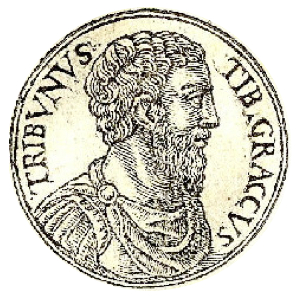
Tiberius GracchusAfter several months of social hibernation, my wife and I finally had a chance to spend a little time with friends, keeping our distance and avoiding physical contact, of course, but at least having a chance to see one another and catch up.  Sitting around our dining table, one of those friends, who works with special needs children in her local elementary school, spoke passionately about the hardships both parents and children will experience if kids can’t return to school soon.  In particular, she said, the challenged children she helps simply cannot learn “remotely”.  For them to focus, concentrate, or learn anything at all requires personal attention and instruction.  “There has to be a way to reopen the schools,” she protested in a pleading, plaintive tone of voice.  “There just has to be a way.”

All of us can sympathize with the sentiments of our friend.  Whether we have young children or not, we all want schools to reopen.  We all long for the pandemic to end.  We all crave the chance to get back to normal, lead the lives we used to lead, and put this disruptive nightmare behind us.  

But what if there isn’t a way to make any of that happen?  What if the pandemic and its consequences are here to stay?  These are questions that we are understandably reluctant to confront.  But they are questions that can’t be ignored forever.

We have been told countless times that COVID-19 will eventually run its course and disappear or that a vaccine will soon be developed to stamp it out once and for all.  In truth, none of these hopeful outcomes is in the least bit certain.  

History is rife with examples of plagues and pandemics that never “disappeared,” but, rather, came creeping back year after year, decade after decade, century after century, until it was normality itself that disappeared.  Diseases and natural calamities have the power to wear down even the most robust and resilient societies and civilizations, to crush even the most determined and deeply felt hopes.

What’s more, the prospects of discovering a pandemic-ending vaccine are not as rosy as we have been led to believe.  Our expectations, and those of the medical experts who advise us, are colored by the almost miraculous success of the polio, small pox, and measles vaccines, which have all but eliminated some of the cruelest diseases in human history.  The fact remains that such outcomes are far from being the norm and by no means guaranteed.

The influenza vaccine, for example, which millions of people take every year, provides only short-term protection and must be constantly modified, with varying degrees of success, as new strains of the virus emerge.  There is, in fact, no “cure” for the ‘flu’.  We have merely found a way of managing it.  After 40 years of trying, virologists have yet to produce any  vaccine for HIV.  Various pharmacological “cocktails” can check its progression and reduce its lethality.  But as with influenza, there is no “cure”.  And to date, no vaccines have been developed to combat any of the seven known corona viruses that came before COVID-19.  The most lethal of these, MERS, kills four out of ten of its victims.  It has been kept in check only by the most aggressive measures of quarantine and isolation.

Counting on a vaccine to save us from this virus may, in the end, turn out to be little more than wishful thinking.

There is a parallel—and more dangerous—response to the pandemic that goes well beyond wishful thinking.  That response asks us to accept the proposition that the worst consequences of covid-19 are inevitable, that we can do little about it, that the cost in human suffering and death is the price we must pay for restoring the political, economic, and social status quo ante.  Some who make this argument do so innocently, without malign intent.  Others, like Donald Trump and members of his administration, do so with cynical and callous disregard for the lives of those they are sworn to serve.  

Whatever the motives of those who make this argument, let’s be clear:  the argument itself is fundamentally immoral, because it proposes to put a price on human life.   But even if that were not the case, its underlying premises are false.

To begin with, we can do something to contain this pandemic—not perfectly or completely or without a hefty price to pay, but certainly with more success than we have thus far achieved.  Virtually every member nation of the European Union has done a far better job of containing the virus, and when it comes to those those few that haven’t, the reasons are crystal clear, as are the lessons to be learned.  If we heed those lessons, we can still stave off the worst.

More importantly, the purported trade-off between fighting the pandemic and “getting back to normal” is not only a false choice but a delusional distraction, as recent attempts by a number of Republican states to reopen have demonstrated.  Instead of returning to normal, these states have only made matters worse—in most cases, much worse.   

We may soon have to face the possibility that we will never have a “cure” for this virus, that it will dog our steps for years to come, that the “normality” we once knew is gone forever.  The economy and the workplace may never return to what they once were; jobs and paychecks may never fully recover; children may never again be taught in the classrooms of the past; our private, for-profit health care system, having been “socialized” to fight the pandemic, may have to stay “socialized” just to survive.

We may soon reach a point when insisting that “there has to be a way” will be worse than a false hope.  It will be an insurmountable obstacle, preventing us from facing up to a new and ineluctable reality, one that little resembles the lives we used to lead, one to which we must adapt if we hope to survive.  At such a point, pretending that we can simply reopen our schools, our businesses, and our economy with the expectation that everything will return to what it once was, will be nothing less than a suicide pact with the future.