The Blindness of Billionaires
by Gracchus
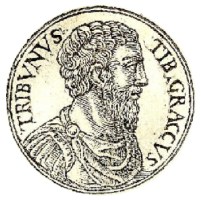 One of the greatest conceits—and cons—in American history is the proposition that, if you are rich, you must be brilliant in all ways, not only in the art of making money, but in everything else. Thus it is that rich Americans have so often imagined themselves to be uniquely qualified to run the country or solve its most intractable problems. In just about every instance, these rich bunglers have failed to deliver.
Look no further than the case of Donald J. Trump. He promised to “make America great again” by bringing his business talents to bear on the business of running the nation. He promised to populate his government with “all the best people”. He promised to “drain the swamp”. And now, he presides over what may well be the most incompetent, ineffectual, and corrupt presidential administration in American history.
None of which appears to deter other self-regarding rich people from trying their hands in the same arena. The former CEO of Starbucks, Howard Schultz (net worth: $3.4 billion), intends to run for president in 2020 as an independent. By way of justification, he cites the longing of a “centrist” majority of Americans for a candidate, who eschews partisanship and radical extremes.
That such a longing exists is a dubious proposition at best, since most voters who call themselves independents are more consistently liberal or conservative than registered Democrats or Republicans.
In any event, what Schultz actually means by “radical” is any attempt to raise taxes on rich people like himself. Without a lick of logic or convincing evidence, he asserts that such proposals are impractical, opposed by a majority of Americans, or just plain wrong.
In all this, he is joined by Michael Bloomberg (net worth: $47.5 billion), who has been toying with the idea of running for president longer than many Americans have been alive. Bloomberg’s claim to political fame is a tour of duty as Mayor of New York City, during which he infamously tried to ban “super-sized” soft drinks. Having failed to deprive New Yorkers of carbonated sugar, he has turned his attention to starving the rest of the country of more consequential things.
Regarding proposals by progressive Democrats to strengthen Social Security or expand health care, Bloomberg whined condescendingly: “I’m getting a little tired of listening to people talking about pie in the sky things”. Regarding a proposal by Senator Elizabeth Warren to impose a wealth tax on the superrich to pay for such “pie in the sky things,” he snarled: “Well, number one, I think the Constitution lets you impose income taxes only. So, it is probably unconstitutional. Number two, I don’t know of any country that has done that. ”
Bloomberg may be richer than Croesus, but if he wants to become president, he should probably read the Constitution, Article I of which gives the federal government the right to impose any taxes it chooses. When he says “I don’t know of any country” that has imposed a wealth tax, the only possible conclusion is that he is being deliberately coy and disingenuous. Dozens of countries have wealth taxes, and a billionaire like Bloomberg must certainly know it. He must also know that one of those countries is oh-so-rich Switzerland, where, it is fair to guess, Michael Bloomberg may have stashed away more than a little of his cash.
What blinkered plutocrats like Schultz and Bloomberg fail to realize, or dare not acknowledge, is that a growing majority of Americans—71 percent in a recent poll—are demanding fundamental changes to our economic system. Large numbers, particularly among the young, say they prefer socialism over capitalism, a notion that would have been considered laughably implausible when I was growing up.
This doesn’t mean, of course, that such people actually understand what “socialism” involves; indeed, they might well change their minds if they did. What it does mean is that they are sick and tired of the current economic system, which they believe to be rigged in favor of the rich and the powerful and therefore fundamentally unjust. In this, they are indisputably correct.
When Dwight David Eisenhower was elected President of the United States in 1952, the richest one percent of the population earned 10 percent of the income and owned 29 percent of the wealth; today, their shares of both income and wealth are more than double those figures. When good old “Ike” was sworn into office, the top marginal tax rate was 92 percent; thanks to Donald Trump’s tax bill, the top marginal rate is now 37 percent, the lowest since the 1920s. In 1980, when Ronald Reagan was elected for the first time, the average CEO was paid 42 times the wages of the average employee; by 2016, when Donald Trump was elected, CEOs were paid 347 times the wages of their employees.
All the while the richest Americans have grown ever richer, most Americans have seen their hopes evaporate and their prospects wither. Since the election of Ronald Reagan, median income in the United States has increased less than one half of one percent per year, barely enough to keep up with inflation and not nearly enough to improve the standard of living for most American families. For the bottom 10 percent, the picture is even bleaker. Their incomes have actually declined. The poorest Americans are poorer today than they were on the day Ronald Reagan took the oath of office.
We should never begrudge those, whose entrepreneurial talents, initiative, and hard work have earned them a just reward. There is no justice, however, in an economic system that enables the richest 26 billionaires in the world to accumulate as much wealth as half the population of the planet. It wasn’t the “free market” that produced this result. It wasn’t the laws of “supply and demand”. Nor was it talent, initiative, and hard work. What spawned this grotesque inequality is a man-made system of rules, in which the rules are rigged by the rich, for the rich.
Billionaires like Howard Schultz and Michael Bloomberg would like us to believe that this is simply “how the world works”—as if economic inequality were an act of nature as inevitable and ineluctable as the rising and the setting of the sun.
Economic inequality is not an act of nature. It is not inevitable. It results from decisions made by human beings, from the institutions we create, the laws we enact, and the rules we make. The rules that have been made by the rich to enrich themselves can be unmade, or remade, by the rest of us. That is the reality that billionaires like Howard Schultz and Michael Bloomberg are too blind to see. Either that, or they hope to blind the rest of us.
We must not let them. We must not listen to them. Above all else, we must not elect them.

